
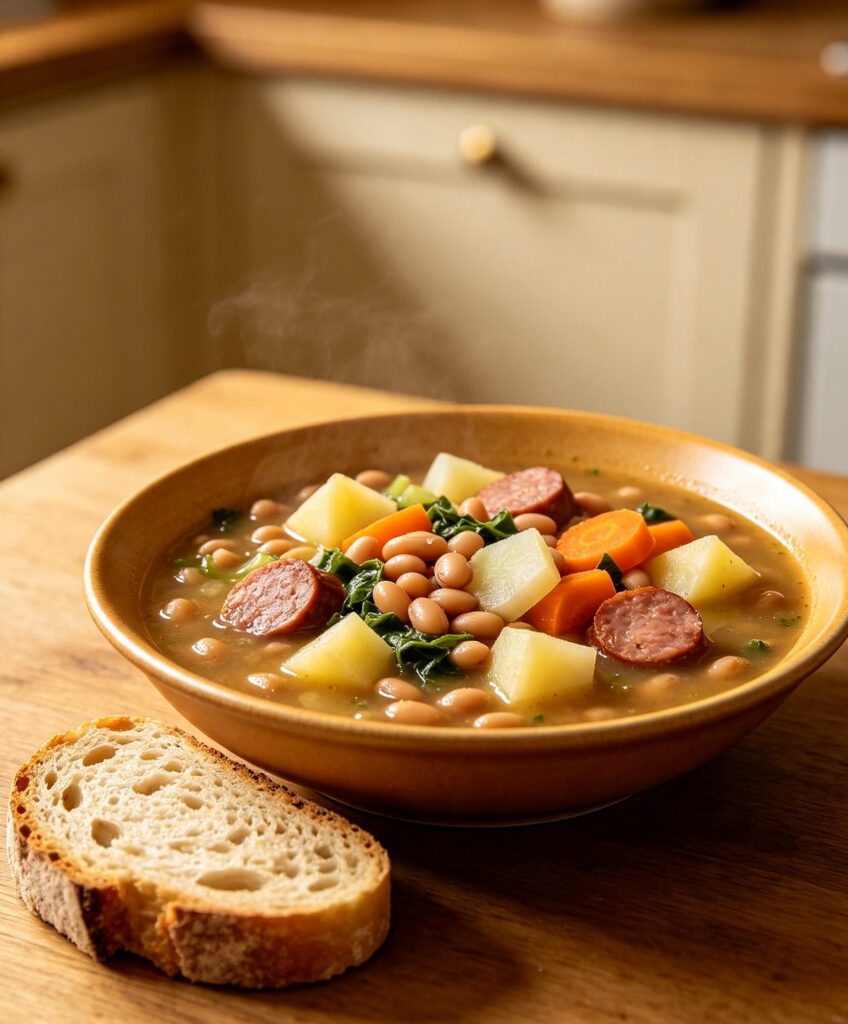
Sopa de Pedra
The Quirky Foodster Team
Ingredients
- Dried beans, soaked overnight (or canned, drained) — 300 g (10.5 oz)
- Chouriço, sliced — 200 g (7 oz)
- Pork belly, cubed — 150 g (5 oz)
- Onion, chopped — 1
- Garlic, minced — 2 cloves
- Potatoes, cubed — 2
- Carrot, sliced — 1
- Shredded cabbage — 140 g (5 oz)
- Tomato paste — 2 tbsp
- Water — 1.9 L (64 fl oz)
- Chopped coriander, to garnish
- Salt and pepper — to taste
Method
- If using dried beans, simmer them in fresh water until nearly tender, about 45 minutes; drain.
- In a large pot, brown the pork belly and chouriço.
- Add the onion and garlic, and sauté until softened.
- Add the tomato paste, cooking briefly, then add the water and bring to a boil.
- Add the beans, potato and carrot, and simmer for 20 minutes until the vegetables are nearly tender.
- Add the shredded cabbage and simmer for a final 8–10 minutes until everything is tender.
- Season with salt and pepper, and garnish with chopped coriander before serving hot.
Introduction: A hearty bean and sausage soup filled with vegetables, a rustic and beloved Portuguese specialty famously named 'stone soup'.
Cultural Background: Sopa de pedra originates from the Ribatejo region, its name playfully referencing a folk tale about soup made from a stone, and the dish has become a much-loved hearty specialty, particularly associated with the town of Almeirim.
Tips: Brown the meats well at the start, as this builds significant depth of flavour for the whole soup. Adjust the vegetable and meat proportions to preference, as this rustic soup is quite flexible.
Variations: Add a piece of blood sausage (morcela) for extra traditional depth. Serve with crusty bread on the side.
Storage: Refrigerate in an airtight container for up to 3 days.
Reheating: Reheat gently on the stovetop over medium heat, stirring occasionally, until hot throughout.
FAQs:
Q: Why is it called 'stone soup'?
A: The name references a folk tale where a clever traveller convinces villagers to contribute ingredients to a pot claimed to contain only a stone, resulting in a hearty communal soup.
Q: What town is especially associated with sopa de pedra?
A: Almeirim, in the Ribatejo region, is particularly famous for this hearty soup.
- Dried beans, soaked overnight (or canned, drained) — 300 g (10.5 oz)
- Chouriço, sliced — 200 g (7 oz)
- Pork belly, cubed — 150 g (5 oz)
- Onion, chopped — 1
- Garlic, minced — 2 cloves
- Potatoes, cubed — 2
- Carrot, sliced — 1
- Shredded cabbage — 140 g (5 oz)
- Tomato paste — 2 tbsp
- Water — 1.9 L (64 fl oz)
- Chopped coriander, to garnish
- Salt and pepper — to taste
Please log in to leave a comment.