
Barszcz Czerwony
The Quirky Foodster Team
Ingredients
- Beetroot, peeled and grated — 1 kg (2.2 lb)
- Onion, chopped — 1
- Garlic, minced — 2 cloves
- Carrot, chopped — 1
- Celery stalk, chopped — 1
- Bay leaves — 2
- Allspice berries — 4
- Vegetable or beef stock — 1.4 L (48 fl oz)
- Lemon juice or vinegar — 2 tbsp
- Sugar — 1 tbsp
- Salt and pepper — to taste
Method
- Combine the grated beetroot, onion, garlic, carrot, celery, bay leaves, allspice and stock in a large pot.
- Bring to a boil, then reduce to a simmer and cook for 40–45 minutes until the beetroot is tender and the broth is richly coloured.
- Strain the soup through a fine sieve, pressing to extract as much liquid as possible, discarding the solids (or reserve the beetroot for another use).
- Return the strained broth to the pot and stir in the lemon juice or vinegar and sugar.
- Season with salt and pepper.
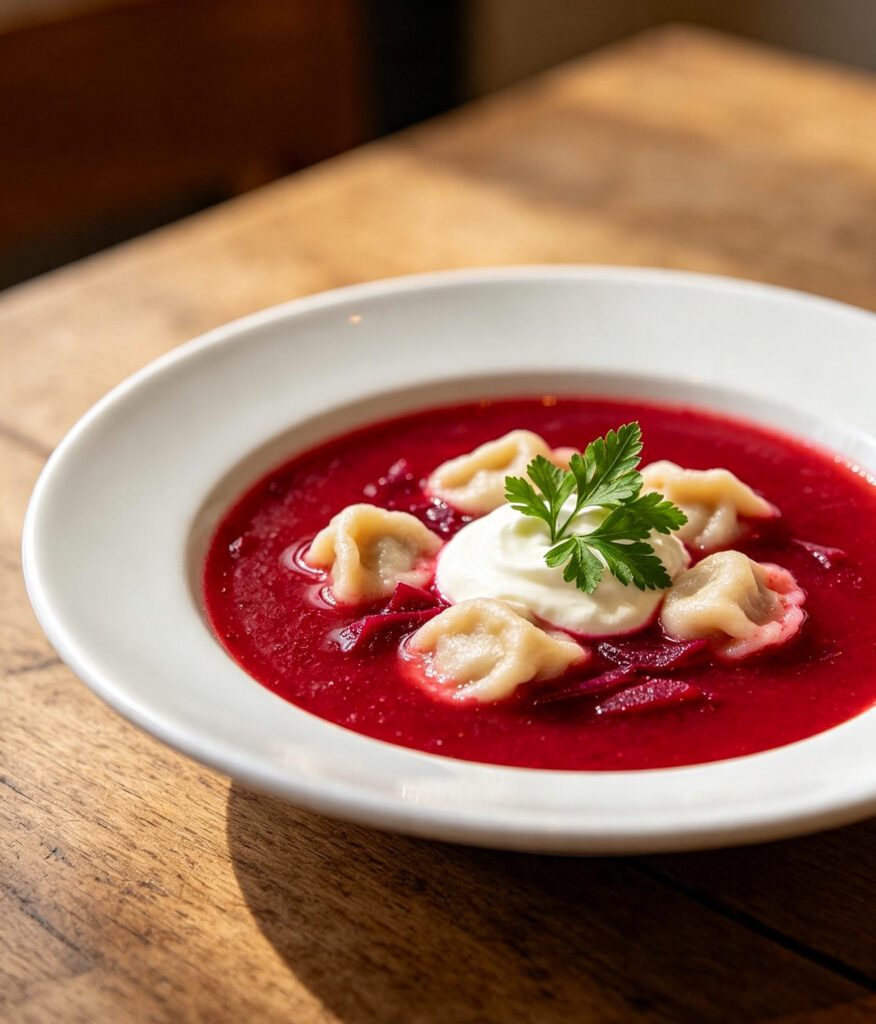
- Serve hot, traditionally with small mushroom dumplings (uszka).
Introduction: A vibrant, clear beetroot soup, one of Poland's most iconic and beloved dishes, especially treasured at Christmas Eve dinner.
Cultural Background: Barszcz holds deep cultural significance in Poland, its vivid red colour and clean, earthy-sweet flavour making it a centrepiece of Wigilia (Christmas Eve dinner), traditionally served with small mushroom-filled dumplings.
Tips: Straining the soup gives the classic clear, vibrant barszcz; skip this step for a chunkier borscht-style soup instead. Balance the sourness and sweetness carefully, as this defines the soup's distinctive character.
Variations: Serve with uszka (small mushroom-filled dumplings) for the traditional Christmas Eve presentation. Add a splash of extra vinegar for a more pronounced tang.
Storage: Refrigerate in an airtight container for up to 4 days.
Reheating: Reheat gently on the stovetop over medium heat until warmed through.
FAQs:
Q: Is barszcz the same as borscht?
A: They share the same beetroot base, but Polish barszcz is typically served as a clear broth, distinct from the often chunkier Ukrainian and Russian borscht.
Q: Why is barszcz strained?
A: Straining gives the classic clear, elegant broth associated with traditional Polish barszcz, especially for Christmas Eve.
- Beetroot, peeled and grated — 1 kg (2.2 lb)
- Onion, chopped — 1
- Garlic, minced — 2 cloves
- Carrot, chopped — 1
- Celery stalk, chopped — 1
- Bay leaves — 2
- Allspice berries — 4
- Vegetable or beef stock — 1.4 L (48 fl oz)
- Lemon juice or vinegar — 2 tbsp
- Sugar — 1 tbsp
- Salt and pepper — to taste
Please log in to leave a comment.