
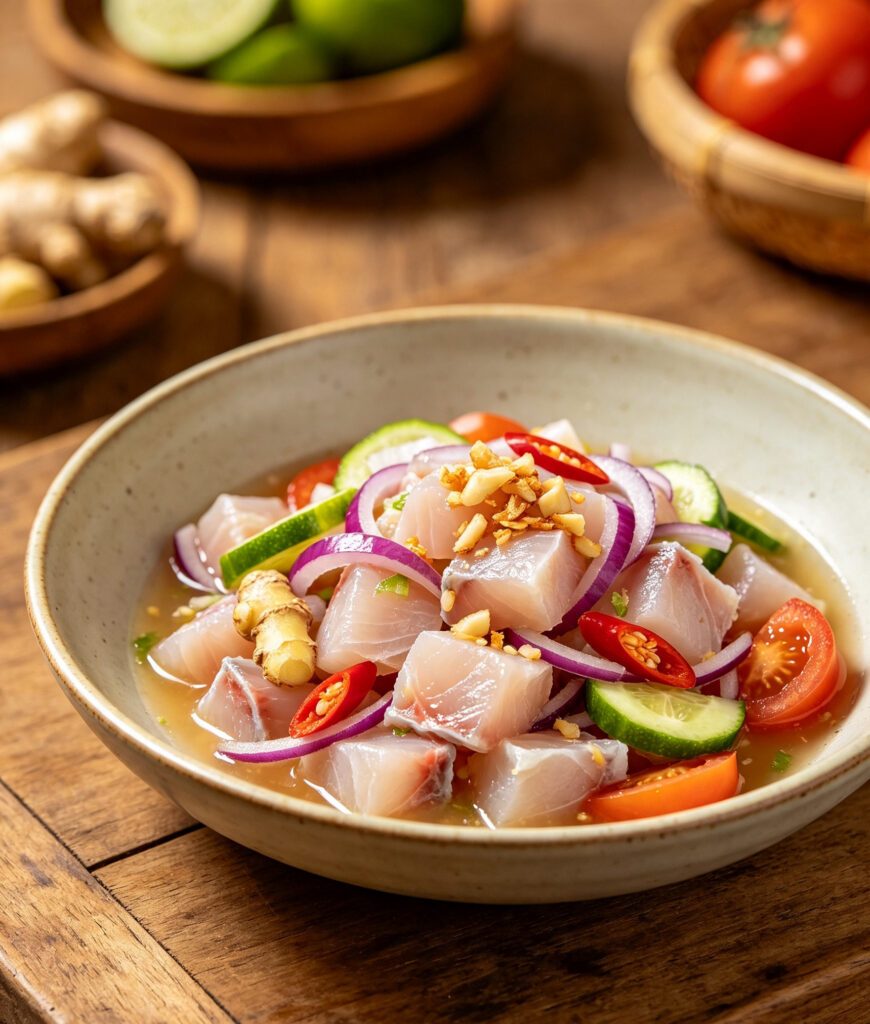
Kinilaw
The Quirky Foodster Team
Ingredients
- Firm white fish, cut into small cubes — 500 g (1 lb 2 oz)
- Vinegar — 120 ml (4 fl oz)
- Onion, thinly sliced — 1
- Grated ginger — 1 tbsp
- Chillies, chopped — 2
- Coconut milk — 60 ml (2 fl oz)
- Salt — to taste
- Chopped spring onion, to garnish
Method
- Combine the fish cubes with the vinegar and a pinch of salt in a non-reactive bowl, ensuring the fish is well coated.
- Let sit for 10–15 minutes, or until the fish turns opaque.
- Drain off some of the vinegar.
- Add the sliced onion, grated ginger, chilli and coconut milk, tossing well.
- Season with salt to taste.
- Garnish with chopped spring onion and serve chilled.
Introduction: Fresh fish cured in vinegar with onion, ginger and chilli, a bright, tangy Filipino starter predating Spanish colonial influence.
Cultural Background: Kinilaw is considered one of the Philippines' oldest culinary techniques, its vinegar-based curing method distinct from the lime-based ceviche found elsewhere in the world, reflecting a uniquely Filipino approach to raw fish preparation.
Tips: Use only the freshest fish, as kinilaw relies on high-quality raw ingredients. Don't over-marinate, as the fish can become tough if left in the vinegar too long.
Variations: Add diced mango for a sweet contrast, a popular regional touch. Adjust the chilli quantity to taste for more or less heat.
Storage: Best eaten fresh; refrigerate leftovers in an airtight container for up to 1 day.
Reheating: This dish is served cold and is not reheated.
FAQs:
Q: How is kinilaw different from ceviche?
A: Kinilaw uses vinegar as the primary curing agent rather than citrus, giving it a distinctly different, sharper tang, and it predates Spanish colonial influence in the Philippines.
Q: What fish works best?
A: Any very fresh, firm white fish, such as tuna or snapper.
- Firm white fish, cut into small cubes — 500 g (1 lb 2 oz)
- Vinegar — 120 ml (4 fl oz)
- Onion, thinly sliced — 1
- Grated ginger — 1 tbsp
- Chillies, chopped — 2
- Coconut milk — 60 ml (2 fl oz)
- Salt — to taste
- Chopped spring onion, to garnish
Please log in to leave a comment.