
Sikhye
The Quirky Foodster Team
Ingredients
- Malted barley powder (yeotgireum) — 100 g (3.5 oz)
- Warm water, divided — 1.9 L (64 fl oz)
- Cooked rice — 370 g (13 oz)
- Sugar, or to taste — 150 g (5 oz)
- Pine nuts, to garnish — a few
Method
- Mix the malted barley powder with 4 cups of warm water and let sit for 20–30 minutes, then strain through a fine sieve or cloth, reserving the liquid and discarding the solids.
- Combine the strained barley liquid with the cooked rice in a large pot.
- Keep warm (around 60°C / 140°F, using a low oven or a rice cooker's 'keep warm' setting) for 4–6 hours, until the rice grains float to the surface, a sign the fermentation is working.
- Once the rice floats, bring the mixture to a boil, then add the remaining water and sugar, stirring until dissolved.
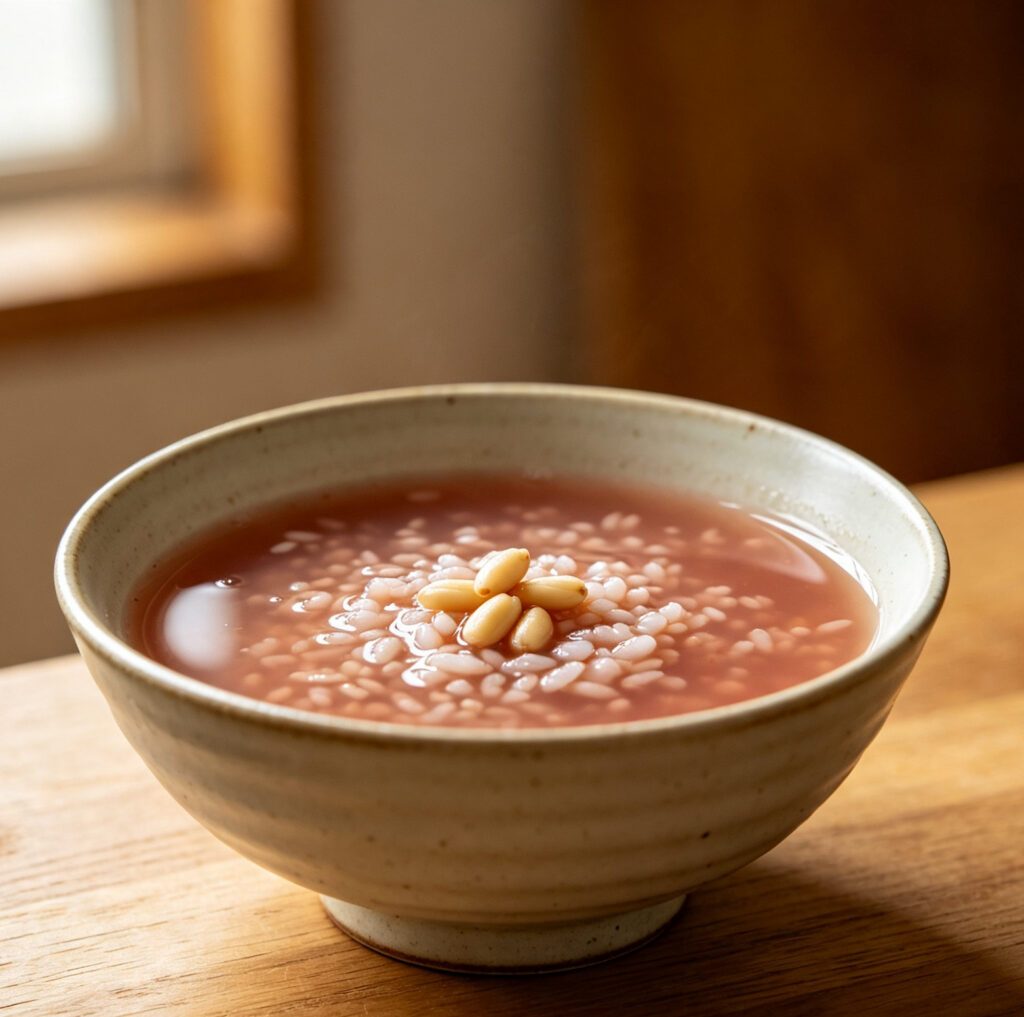
- Chill thoroughly before serving cold, garnished with a few pine nuts.
Introduction: A sweet, lightly fermented rice drink flavoured with malted barley, served chilled as a refreshing traditional Korean beverage.
Cultural Background: Sikhye has been enjoyed across the Korean peninsula for generations, its gentle sweetness and rice grains floating in the liquid making it a beloved drink for celebrations and family gatherings.
Tips: Maintaining a consistent warm temperature during the fermentation stage is key to getting the rice grains to properly float. Chill the finished drink thoroughly, as sikhye is traditionally served very cold.
Variations: Add a few slices of fresh ginger while boiling for a subtle warmth. Adjust the sugar to taste for a more or less sweet drink.
Storage: Store in a sealed container in the refrigerator for up to 5 days.
Reheating: This drink is served cold and is not reheated.
FAQs:
Q: What is malted barley powder?
A: A sprouted, dried and ground barley product, used to convert the rice starch into natural sugars during the sikhye fermentation process.
Q: Why do the rice grains float?
A: This is a traditional sign that the enzymatic fermentation process has worked properly, converting starches and making the rice buoyant.
- Malted barley powder (yeotgireum) — 100 g (3.5 oz)
- Warm water, divided — 1.9 L (64 fl oz)
- Cooked rice — 370 g (13 oz)
- Sugar, or to taste — 150 g (5 oz)
- Pine nuts, to garnish — a few
Please log in to leave a comment.