
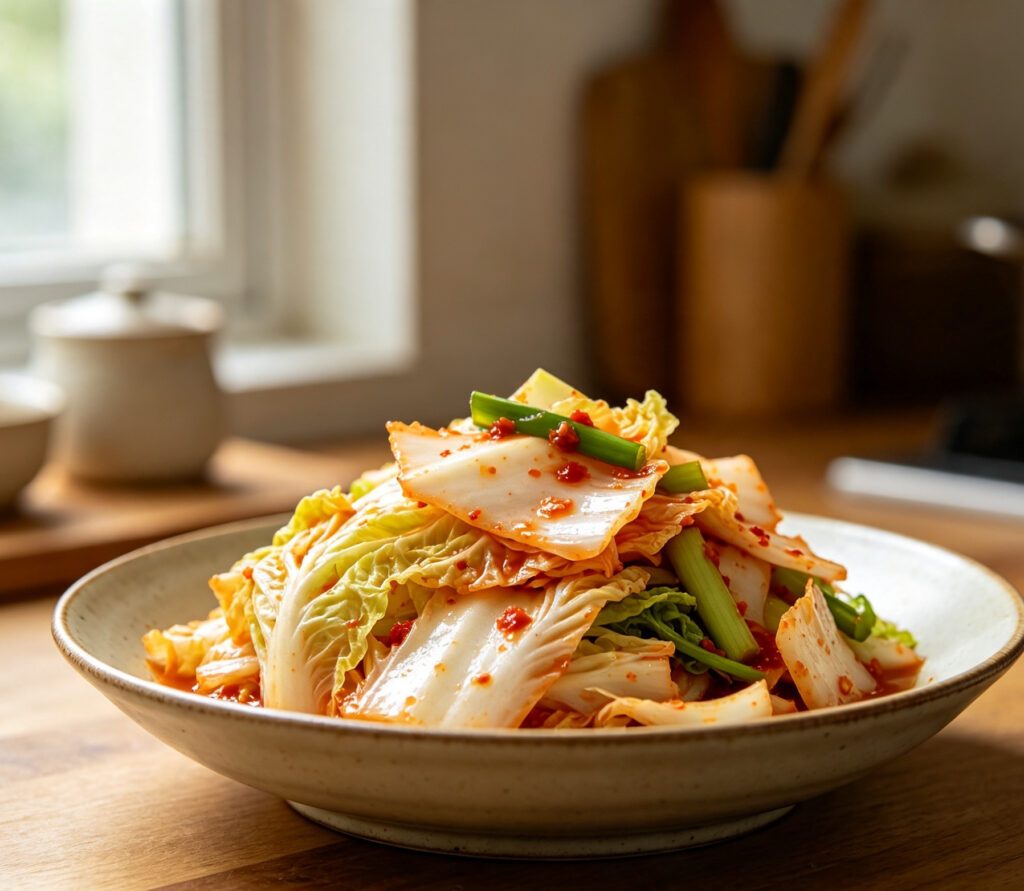
Pyongyang Mild Kimchi
The Quirky Foodster Team
Ingredients
- Large napa cabbage, quartered — 1
- Coarse salt, for salting — 100 g (3.5 oz)
- Daikon radish, julienned — 1
- Spring onions, chopped — 3
- Garlic, minced — 4 cloves
- Ginger, minced — 1 tbsp
- Mild chilli powder — 2 tbsp
- Water, for the brine — 960 ml (32 fl oz)
- Sugar — 1 tbsp
Method
- Salt the cabbage quarters generously and let sit for 2–3 hours, turning occasionally, until the leaves have softened and wilted.
- Rinse the cabbage thoroughly under cold water to remove excess salt, then drain well.
- Combine the julienned radish, spring onion, garlic, ginger, chilli powder and sugar to make the seasoning paste.
- Rub the seasoning paste between the cabbage leaves, working it in gently but thoroughly.
- Pack the seasoned cabbage into a large jar, pressing down firmly.
- Pour in enough water to just cover, creating a light brine.
- Seal and let ferment at room temperature for 1–2 days, then refrigerate for further slow fermentation and storage.
Introduction: A milder, less spicy style of napa cabbage kimchi, characteristic of Pyongyang and northern Korean cuisine, with a clean, refreshing brine.
Cultural Background: Northern-style kimchi, particularly from Pyongyang, is traditionally less spicy and more watery than its southern counterparts, its cool, clean flavour reflecting the region's colder climate and distinct culinary character.
Tips: Northern-style kimchi is intentionally milder and more watery than spicier southern versions — resist the urge to add extra chilli. Taste periodically during fermentation to catch it at your preferred level of tang.
Variations: Add a few slices of pear for a subtle natural sweetness, a traditional northern touch. Adjust the fermentation time to taste, as preferences for tanginess vary.
Storage: Store in a sealed jar in the refrigerator for several weeks, as fermentation continues slowly over time.
Reheating: This is a fermented cold dish and is not reheated.
FAQs:
Q: How is northern kimchi different from southern kimchi?
A: Northern-style kimchi, particularly from Pyongyang, is typically milder in spice and more watery, or brine-forward, compared to the spicier, thicker southern versions.
Q: How long does kimchi need to ferment?
A: It can be enjoyed fresh after a day or two, though it continues to develop flavour and tang over several weeks in the refrigerator.
- Large napa cabbage, quartered — 1
- Coarse salt, for salting — 100 g (3.5 oz)
- Daikon radish, julienned — 1
- Spring onions, chopped — 3
- Garlic, minced — 4 cloves
- Ginger, minced — 1 tbsp
- Mild chilli powder — 2 tbsp
- Water, for the brine — 960 ml (32 fl oz)
- Sugar — 1 tbsp
Please log in to leave a comment.