
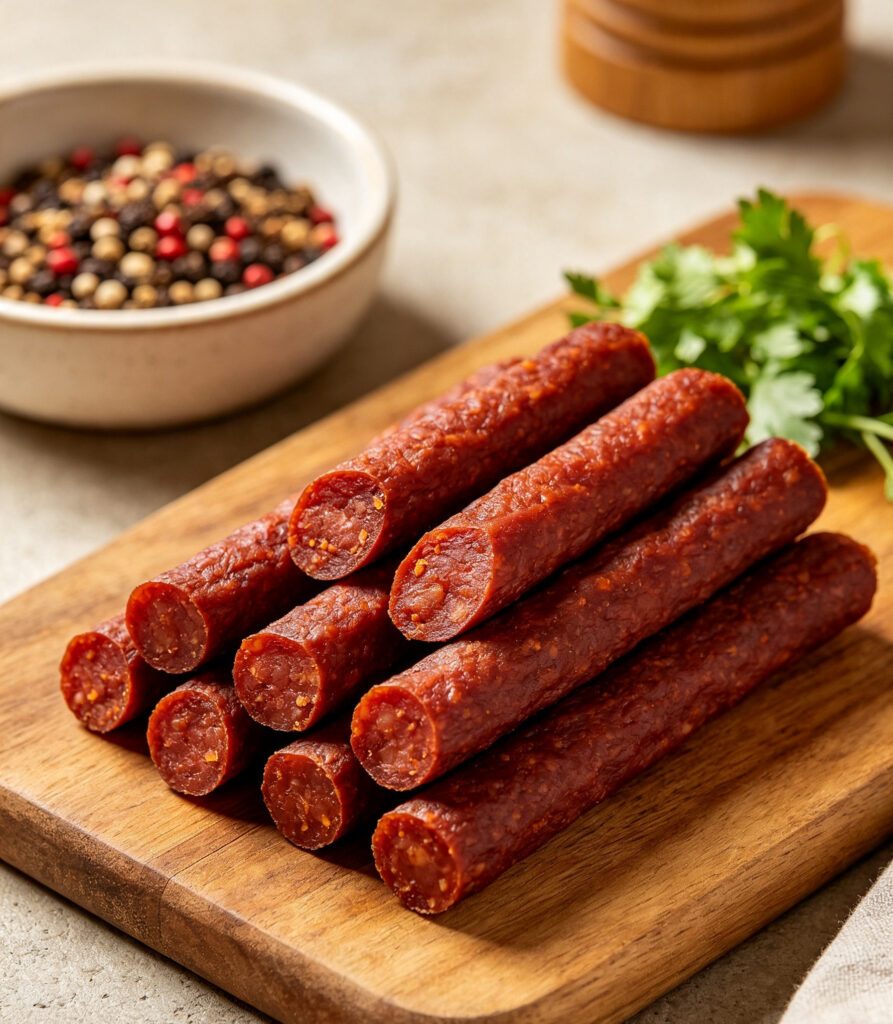
Droëwors (Droëwors)
The Quirky Foodster Team
Ingredients
- Minced beef, with a little fat content — 1.5 kg (3.3 lb)
- Coarsely ground coriander seeds — 3 tbsp
- Cracked black pepper — 1 tbsp
- Coarse salt — 2 tbsp
- Vinegar — 60 ml (2 fl oz)
- Natural sausage casings
Method
- Combine the minced meat with the ground coriander, pepper, salt and vinegar, mixing thoroughly.
- Stuff the seasoned meat into sausage casings using a sausage stuffer or funnel, forming long, thin sausages.
- Hang the sausages in a well-ventilated, cool, dry space, away from direct sunlight and insects.
- Dry for 3–5 days, checking regularly, until firm and dried throughout to your preferred texture.
- Cut into portions before serving.
Introduction: Thin, dried spiced sausage, a portable, savoury snack made using the same air-drying tradition as biltong.
Cultural Background: Droëwors shares its curing philosophy with biltong but uses minced, seasoned meat formed into sausage casings before drying, offering a different texture and an equally beloved snack found at Namibian gatherings and farm stalls.
Tips: Use meat with a little natural fat content, as this helps the sausages dry evenly without becoming too tough. Good airflow is essential for safe drying, similar to the biltong process.
Variations: Adjust the spice blend to taste, with some versions including a little chilli. Make thinner sausages for a faster drying time and a snappier bite.
Storage: Store in a paper bag or breathable container at room temperature for up to 3 weeks, or refrigerate for longer freshness.
Reheating: Not applicable — droëwors is eaten as is, without cooking or reheating.
FAQs:
Q: What's the difference between droëwors and biltong?
A: Droëwors is made from minced, seasoned meat formed into sausage casings before drying, while biltong is whole strips of cured, dried meat.
Q: Is droëwors always beef?
A: Beef is most common, though game meats are also used in some traditional and farm-produced versions.
- Minced beef, with a little fat content — 1.5 kg (3.3 lb)
- Coarsely ground coriander seeds — 3 tbsp
- Cracked black pepper — 1 tbsp
- Coarse salt — 2 tbsp
- Vinegar — 60 ml (2 fl oz)
- Natural sausage casings
Please log in to leave a comment.