
Mont Lone Yay Baw
The Quirky Foodster Team
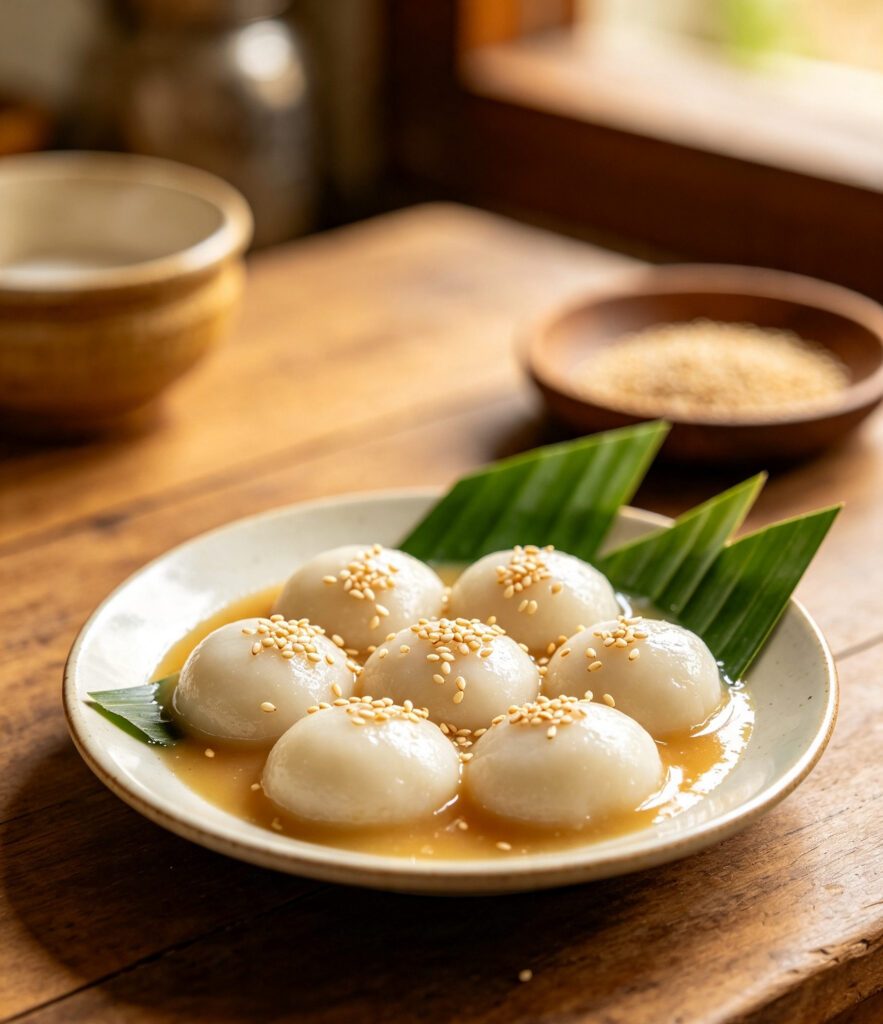
Ingredients
- Glutinous rice flour — 2 cups (280 g / 10 oz)
- Water, plus more as needed — 1 cup (240 ml / 8 fl oz)
- Grated palm sugar or jaggery, cut into small cubes — 1/2 cup (100 g / 3.5 oz)
- Grated coconut, to garnish — 1/2 cup (40 g / 1.5 oz)
- Of salt — pinch
Method
- Combine the glutinous rice flour and salt in a bowl, then gradually add water, kneading until a smooth, soft dough forms.
- Divide the dough into small balls, flatten each in your palm, and place a small cube of palm sugar in the centre.
- Enclose the sugar fully and roll back into a smooth ball.
- Bring a large pot of water to a boil.
- Drop the balls into the boiling water and cook until they float to the surface, about 5–7 minutes.
- Remove with a slotted spoon and roll in grated coconut before serving warm.
Introduction: Chewy glutinous rice balls filled with melting palm sugar, boiled until they float, a traditional sweet closely tied to the Burmese Thingyan water festival.
Cultural Background: Mont lone yay baw (‘rice balls floating on water’) is especially associated with Thingyan, Myanmar’s water festival marking the traditional new year, when families gather to make and share the sweet as part of the celebrations.
Tips: Seal the palm sugar filling completely, as any exposed sugar can leak out during boiling. Serve promptly after cooking, as the filling is at its best warm and slightly molten.
Variations: Add a few drops of pandan extract to the dough for colour and fragrance. Use different coloured dough for a more festive presentation.
Storage: Best eaten fresh and warm; leftovers can be refrigerated for up to 1 day, though the texture firms up.
Reheating: Reheat briefly by steaming or in a microwave with a splash of water for a few seconds.
Nutrition: Per serving (approx., 4 pieces): 260 kcal, 2 g protein, 4 g fat, 54 g carbohydrate.
FAQs:
Q: What is Thingyan?
A: Myanmar’s traditional water festival marking the new year, a major national
Q: What happens if the sugar leaks out during boiling?
A: A small amount of leakage is common;
- Glutinous rice flour — 2 cups (280 g / 10 oz)
- Water, plus more as needed — 1 cup (240 ml / 8 fl oz)
- Grated palm sugar or jaggery, cut into small cubes — 1/2 cup (100 g / 3.5 oz)
- Grated coconut, to garnish — 1/2 cup (40 g / 1.5 oz)
- Of salt — pinch
Please log in to leave a comment.