
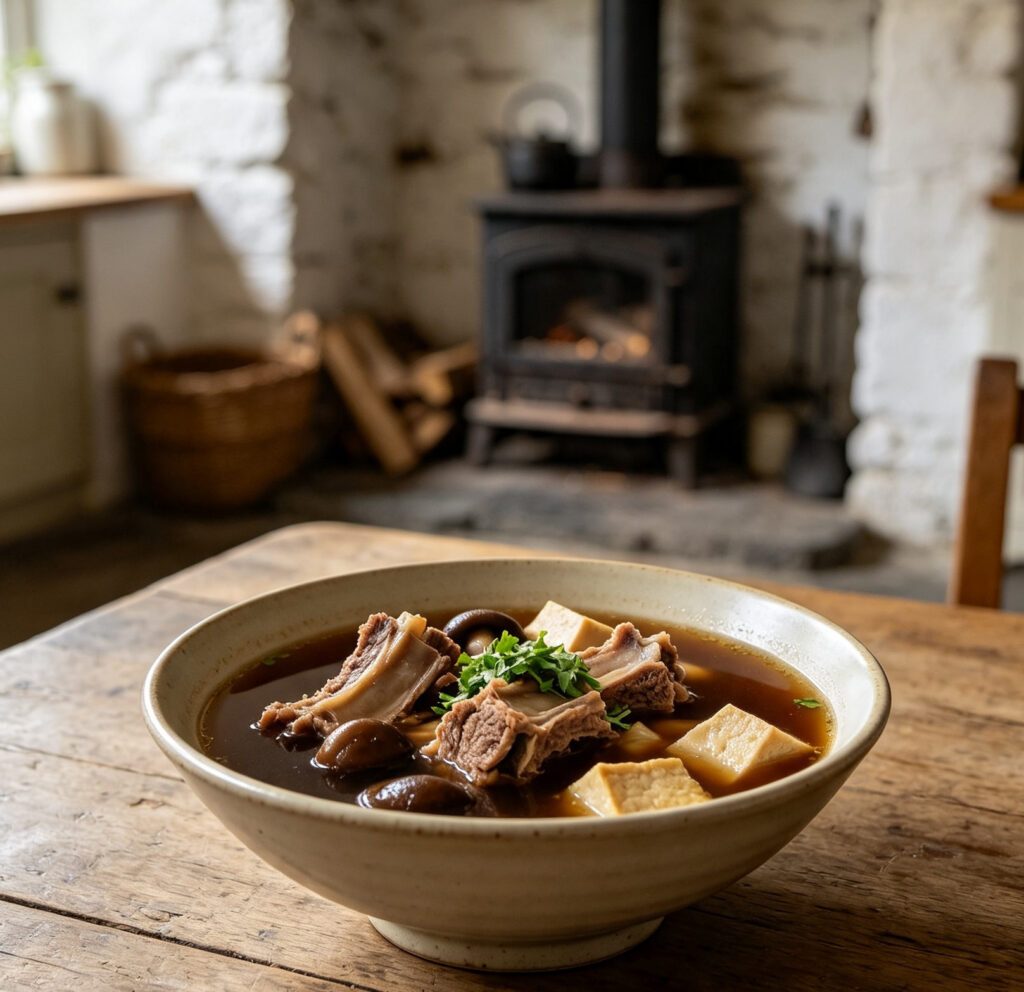
Bak Kut Teh (Herbal Pork Rib Soup, Klang-Style)
The Quirky Foodster Team
Ingredients
- Pork ribs, cut into pieces — 800 g (1 3/4 lb)
- Water — 1.5 L (6 cups)
- Whole head Garlic, whole cloves, peeled — 1
- Bak kut teh spice mix (star anise, cinnamon, cloves, fennel, white peppercorns), or 20 g mixed whole spices — 1 packet
- Dark soy sauce — 30 ml (2 tbsp)
- Light soy sauce — 15 ml (1 tbsp)
- Rock sugar or sugar — 10 g (2 tsp)
- Salt — to taste
- Fried tofu puffs, optional — 150 g (5 oz)
- Shiitake mushrooms, soaked, optional — 8
Method
- Place the pork ribs in a pot of boiling water for 2–3 minutes to remove impurities, then drain and rinse.
- Return the ribs to a clean pot with the 1.5 litres fresh water, whole garlic cloves and spice mix (in a muslin bag if using loose spices).
- Bring to a boil, then reduce heat to low, cover, and simmer for 1 1/2 to 2 hours, until the pork is very tender.
- Add the tofu puffs and soaked mushrooms, if using, along with the dark and light soy sauce and sugar, and simmer for a further 15–20 minutes.
- Season with salt to taste, remove the spice bag, and serve hot with steamed rice and a side of soy-chili dipping sauce.
Introduction: Meaty pork ribs simmered for hours in a deeply aromatic broth of herbs and spices, until the meat is fall-off-the-bone tender — a signature dish of Klang, Selangor.
Cultural Background: Bak kut teh, meaning ‘meat bone tea’, was developed by Chinese labourers in the port town of Klang, who needed a hearty, restorative meal after long working hours. Traditionally served with rice and a pot of Chinese tea (thought to help cut the richness of the broth), it remains one of Malaysia’s most cherished comfort foods, often eaten for breakfast or a leisurely weekend meal.
Tips: Blanching the ribs first removes impurities and results in a cleaner, clearer broth. Simmer gently over low heat for the full time — rushing with high heat will not tenderize the meat properly. Whole garlic cloves become soft and mellow after the long simmer and are traditionally eaten alongside the soup.
Variations: Add dried squid to the broth for extra umami depth, a common regional variation. Use pork belly or trotters in place of ribs for a fattier, richer broth. Serve with youtiao (Chinese fried dough sticks) for dipping into the broth.
Storage: Store in an airtight container in the refrigerator for up to 3 days; the broth’s flavour often improves the next day.
Reheating: Reheat gently in a covered pot over low-medium heat, stirring occasionally, until piping hot throughout, about 10 minutes.
Nutrition: Approx. per serving: 480 kcal, 32 g protein, 8 g carbohydrate, 34 g fat, 1 g fibre.
FAQs:
Q: Can I use a pre-made spice packet?
A: Yes, pre-packaged bak kut teh spice mixes are widely available and convenient, giving a reliable, balanced flavour.
Q: Why blanch the ribs first?
A: Blanching removes blood and impurities from the bones, resulting in a much clearer, cleaner-tasting broth.
Q: Is bak kut teh gluten-free?
A: It can be, provided a gluten-free soy sauce is used, as regular soy sauce typically contains wheat.
- Pork ribs, cut into pieces — 800 g (1 3/4 lb)
- Water — 1.5 L (6 cups)
- Whole head Garlic, whole cloves, peeled — 1
- Bak kut teh spice mix (star anise, cinnamon, cloves, fennel, white peppercorns), or 20 g mixed whole spices — 1 packet
- Dark soy sauce — 30 ml (2 tbsp)
- Light soy sauce — 15 ml (1 tbsp)
- Rock sugar or sugar — 10 g (2 tsp)
- Salt — to taste
- Fried tofu puffs, optional — 150 g (5 oz)
- Shiitake mushrooms, soaked, optional — 8
Please log in to leave a comment.