
Mains
Sadza neNyama
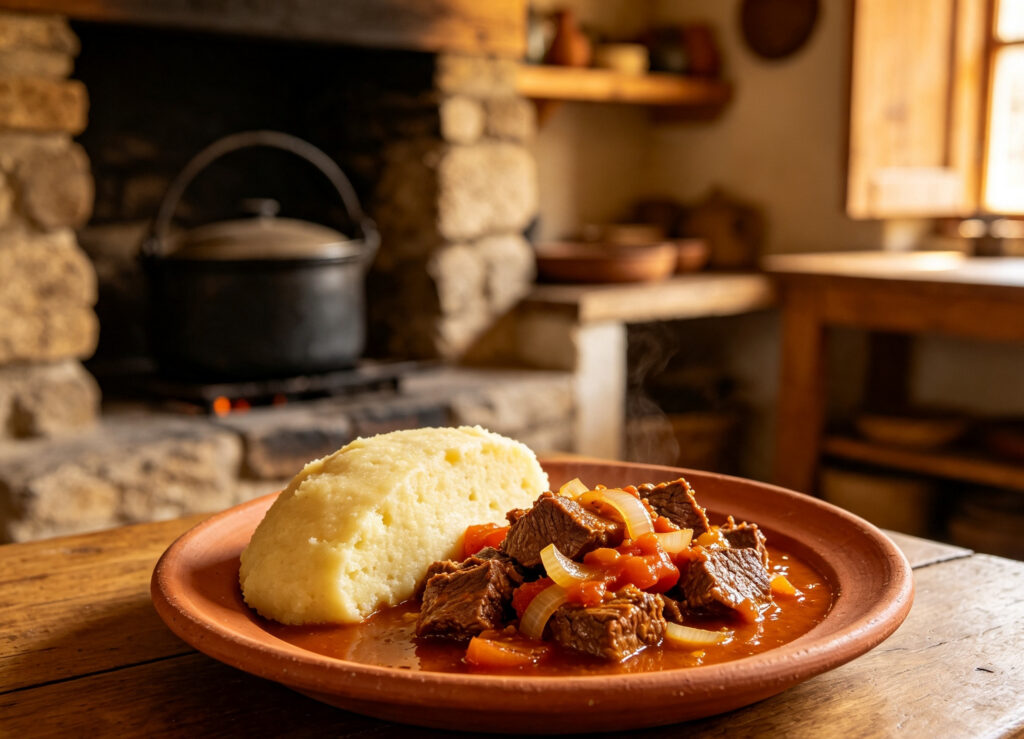
Ingredients
- For the stew:
- 800 g (1.75 lb) beef chuck, cut into chunks
- 3 tbsp vegetable oil
- 1 onion, chopped
- 3 garlic cloves, minced
- 3 tomatoes, chopped
- 1 green bell pepper, chopped
- 500 ml (2 cups) beef stock or water
- 1 bay leaf
- Salt and pepper, to taste
- For the sadza:
- 400 g (2 cups) maize meal
- 1 litre (4 cups) water, divided
Method
- For the stew: heat the oil in a large pot over medium-high heat and brown the beef on all sides, about 8 minutes. Remove and set aside.
- In the same pot, sauté the onion and garlic until softened, about 4 minutes. Add the tomatoes and bell pepper, cooking until softened, about 6 minutes.
- Return the beef to the pot, add the stock or water and bay leaf, and bring to a simmer. Cover and cook over low heat for 1 hour to 1 hour 15 minutes, until the beef is very tender and the sauce has thickened. Season with salt and pepper.
- For the sadza: bring 700 ml of the water to a boil in a separate saucepan. Mix the remaining 300 ml water with the maize meal to form a smooth paste.
- Reduce the heat under the boiling water to low and stir in about a third of the maize paste, stirring constantly until it thickens slightly.
- Gradually add the remaining maize paste, stirring vigorously and continuously with a sturdy wooden spoon for 8-10 minutes, until the sadza is thick, smooth and pulls away from the sides of the pan.
- Shape the sadza into a mound on a serving plate using a wet spoon. Serve immediately alongside the hot beef stew.
Introduction: Sadza neNyama is the quintessential Zimbabwean meal — firm maize meal sadza served alongside a rich, well-seasoned beef stew.
Cultural Background: Sadza neNyama is the quintessential Zimbabwean meal — firm maize meal sadza served alongside a rich, well-seasoned beef stew. Eaten daily across the country in homes of every background, it represents the heart of Zimbabwean home cooking and is often considered the national dish.
Tips: Brown the beef well first — this builds the deep flavour base that defines a good stew. Add the maize meal to the sadza gradually while stirring constantly to avoid lumps. Sadza must be eaten hot and fresh; it firms up quickly once it cools.
Variations: Add chopped carrots to the stew for extra sweetness and nutrition. Use oxtail in place of beef chuck for a richer, more traditional variation. Serve with a side of cooked greens for a complete traditional plate. The stew is not applicable in its traditional form due to beef; the sadza itself is naturally vegan as written.
Storage: Refrigerate the stew in an airtight container for up to 3 days, or freeze for up to 2 months; sadza is best eaten fresh.
Reheating: Reheat the stew gently on the stovetop; refresh sadza by steaming briefly or microwaving covered with a damp cloth.
Nutrition: Per serving (approx., stew and sadza): 520 kcal, 35 g protein, 52 g carbohydrates, 20 g fat, 4 g fibre.
FAQs:
Q: Why is my sadza lumpy?
A: Lumps form when the maize meal paste is added too quickly or not stirred vigorously enough — add gradually and stir firmly and constantly.
Q: What is the correct texture for sadza?
A: It should be thick, smooth and firm enough to hold its shape when mounded, similar to a very stiff dough.
Q: Can I make the stew ahead of time?
A: Yes, the stew keeps and reheats well, though sadza should always be made fresh just before serving.
Please log in to leave a comment.