
Breakfast
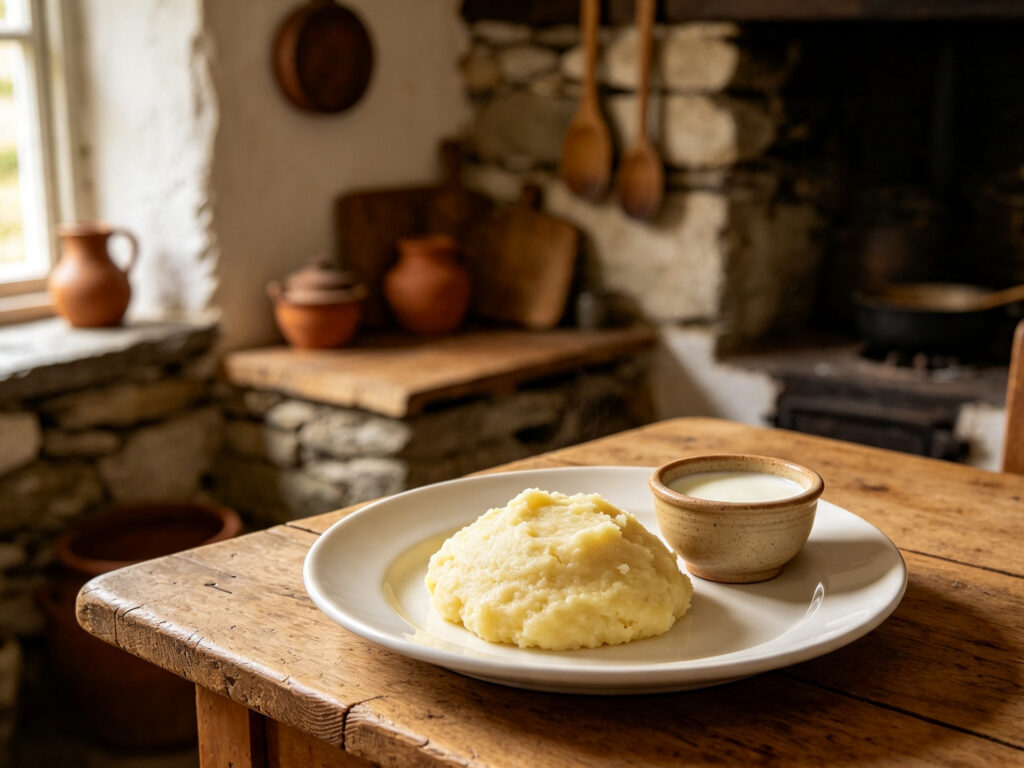
Mafi neSadza reMangwanani
Ingredients
- 400 g (about 2 cups) leftover sadza, crumbled or cubed
- 500 ml (2 cups) mafi (fermented sour milk), or plain natural yoghurt thinned with a little milk
- Sugar, to taste (optional)
Method
- Crumble the leftover sadza into small pieces using your hands or a fork.
- Place the crumbled sadza into individual serving bowls.
- Pour the mafi (or thinned yoghurt) generously over the sadza.
- Add a little sugar if desired, to taste.
- Mix gently just before eating and serve at room temperature or lightly chilled.
Introduction: In rural Zimbabwean households, leftover sadza from the previous night is often crumbled and eaten in the morning with mafi, a naturally fermented sour milk similar to a thin yoghurt.
Cultural Background: In rural Zimbabwean households, leftover sadza from the previous night is often crumbled and eaten in the morning with mafi, a naturally fermented sour milk similar to a thin yoghurt. This simple, no-waste breakfast reflects traditional dairy-farming practices found across the country’s cattle-keeping communities.
Tips: Day-old sadza works best, as it crumbles more easily than freshly made sadza. If mafi isn’t available, natural plain yoghurt thinned with a splash of milk is a close substitute. This dish is traditionally eaten cool, not reheated.
Variations: Add fresh fruit such as banana for extra sweetness. Stir in a spoon of peanut butter for a richer breakfast. Use a slightly sweetened yoghurt for a milder-tasting alternative. Vegetarian as written; not authentically converted to vegan, as fermented dairy milk is central to the dish.
Storage: Best assembled fresh; mafi can be stored separately in the refrigerator for up to 5 days, and leftover sadza for up to 2 days.
Reheating: Not applicable — this dish is traditionally eaten cold or at room temperature.
Nutrition: Per serving (approx.): 230 kcal, 8 g protein, 34 g carbohydrates, 6 g fat, 1 g fibre.
FAQs:
Q: What is mafi?
A: Mafi is a traditional naturally fermented sour milk, similar in tartness and texture to a thin, drinkable yoghurt.
Q: Can I use store-bought yoghurt instead?
A: Yes, plain natural yoghurt thinned slightly with milk is a good substitute where mafi isn’t available.
Q: Is this a common everyday breakfast?
A: Yes, especially in rural and farming households where leftover sadza and fresh milk are always on hand.
Please log in to leave a comment.