
Mains
Kapenta ne Nshima
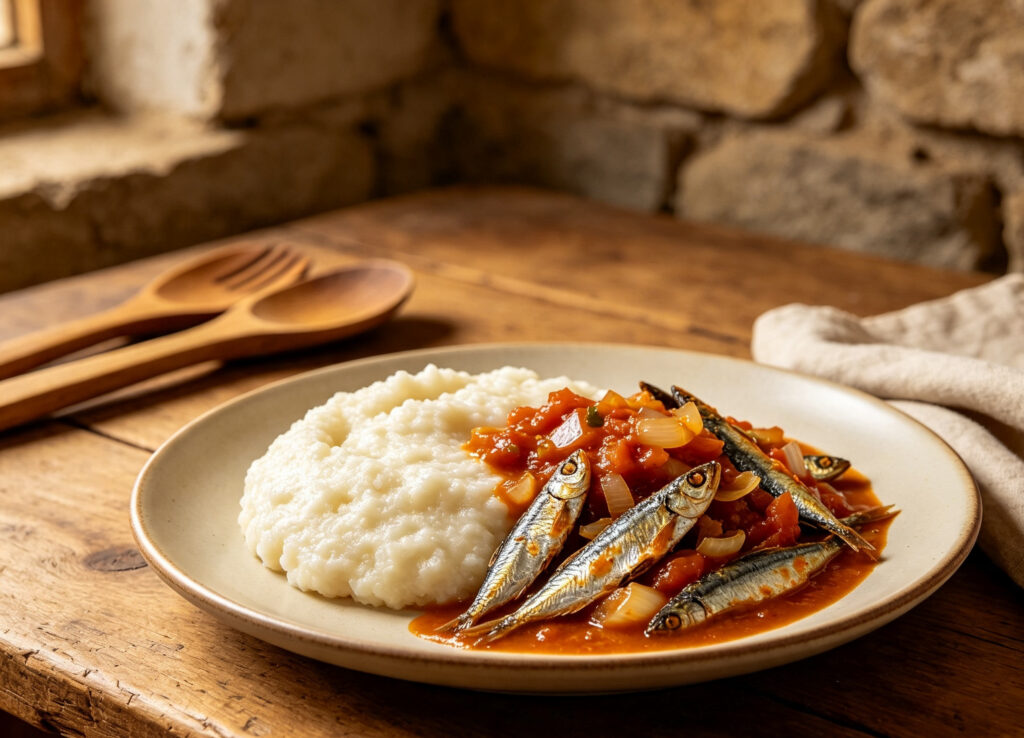
Ingredients
- 250 g (9 oz) dried kapenta, rinsed and soaked for 20-30 minutes
- 3 tbsp vegetable oil
- 1 onion, chopped
- 2 garlic cloves, minced
- 3 tomatoes, chopped
- 1 red chilli, finely chopped (optional)
- 250 ml (1 cup) water
- Salt and pepper, to taste
- 400 g (2 cups) maize meal and 1 litre (4 cups) water, for the nshima
Method
- Drain the soaked kapenta well.
- Heat the oil in a large frying pan over medium heat and sauté the onion and garlic until softened, about 4 minutes.
- Add the tomatoes and cook until they break down, about 6 minutes.
- Add the drained kapenta, chilli if using, and water. Simmer for 12-15 minutes, stirring occasionally, until the sauce has thickened and the fish is well coated.
- Season with salt and pepper to taste (go easy on salt, as kapenta is naturally salty).
- Prepare the nshima using the standard method (see Nshima recipe) and serve hot alongside the kapenta stew.
Introduction: Kapenta, the small dried fish harvested from Zambia’s great lakes, forms the base of this well-loved main dish.
Cultural Background: Kapenta, the small dried fish harvested from Zambia’s great lakes, forms the base of this well-loved main dish. Rehydrated and cooked into a rich, savoury tomato-based stew, it’s served alongside nshima as a filling, protein-packed everyday meal, especially popular in regions near Lake Kariba and Lake Tanganyika.
Tips: Soak the kapenta thoroughly to soften and reduce excess saltiness before cooking. Taste the stew before adding extra salt, as dried kapenta is naturally quite salty. Serve the nshima fresh and hot for the best texture.
Variations: Add chopped greens such as rape to the stew for extra nutrition. Increase chilli for a spicier version. Add a spoon of groundnut paste for a richer, creamier sauce. Not applicable in its traditional form; the dish is defined by dried fish. The nshima component is naturally vegan on its own.
Storage: Refrigerate the kapenta stew in an airtight container for up to 3 days; nshima is best eaten fresh.
Reheating: Reheat the stew gently on the stovetop over low heat; refresh nshima by steaming briefly or microwaving covered.
Nutrition: Per serving (approx., stew and nshima): 430 kcal, 24 g protein, 48 g carbohydrates, 16 g fat, 4 g fibre.
FAQs:
Q: Where can I find dried kapenta?
A: It’s available at African grocery stores, particularly those specialising in Southern or Central African products.
Q: Is kapenta very salty?
A: Yes, naturally so — soak it well and taste before adding extra salt to the dish.
Q: Can I use a different dried fish?
A: Yes, other small dried fish can be substituted, though the flavour will differ slightly from traditional kapenta.
Please log in to leave a comment.