
Drinks
Shai Haleeb
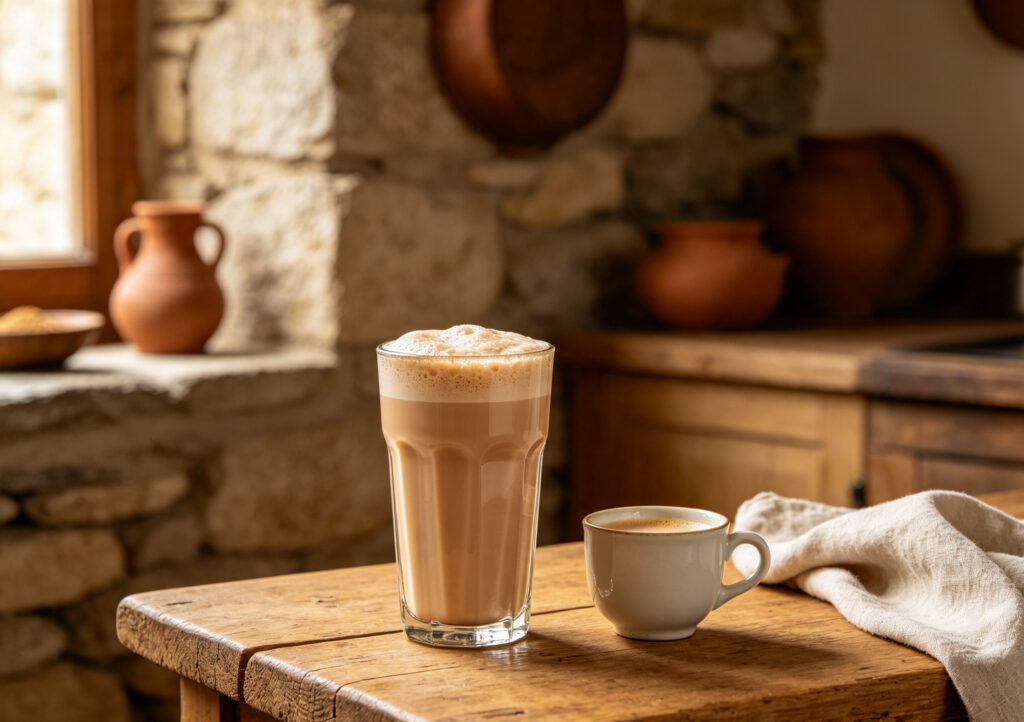
Ingredients
- 500 ml (2 cups) water
- 500 ml (2 cups) whole milk
- 2 black tea bags or 2 tbsp loose black tea
- 3-4 green cardamom pods, lightly crushed
- 1 small piece cinnamon stick (optional)
- Sugar, to taste
Method
- Combine the water, milk, tea and cardamom pods (and cinnamon stick, if using) in a medium saucepan.
- Bring to a gentle boil, then reduce heat and simmer for 5-7 minutes, allowing the flavours to infuse.
- Strain through a fine sieve into cups or a serving teapot.
- Stir in sugar to taste and serve hot.
Introduction: A comforting, aromatic milk tea spiced with cardamom and sometimes cinnamon or ginger, shai haleeb is a daily fixture across Yemen, enjoyed at breakfast, throughout the day with guests, and after meals as a warming, hospitable gesture.
Cultural Background: A comforting, aromatic milk tea spiced with cardamom and sometimes cinnamon or ginger, shai haleeb is a daily fixture across Yemen, enjoyed at breakfast, throughout the day with guests, and after meals as a warming, hospitable gesture.
Tips: Simmer gently rather than boiling vigorously to avoid the milk curdling or scorching. Crush the cardamom pods lightly to release their aroma more effectively. Serve immediately while hot, as is traditional for Yemeni tea service.
Variations: Add a few strands of saffron for extra colour and aroma. Use evaporated milk for an even richer, creamier tea. Add a slice of fresh ginger for a warming, spiced variation. Vegetarian as written; a vegan version can use a plant milk such as oat or almond milk in place of dairy milk.
Storage: Best served fresh; not typically stored, as tea flavour and texture are best right after brewing.
Reheating: Reheat gently on the stovetop over low heat, taking care not to let the milk boil too vigorously.
Nutrition: Per serving (approx.): 90 kcal, 4 g protein, 10 g carbohydrates, 4 g fat, 0 g fibre.
FAQs:
Q: Can I use a tea bag instead of loose tea?
A: Yes, either works well; loose tea can give a slightly stronger, more traditional flavour.
Q: Is this tea very sweet?
A: Sweetness varies by household preference; add sugar gradually and adjust to taste.
Q: What’s the significance of tea in Yemeni culture?
A: Tea is central to hospitality in Yemen, commonly offered to guests as a warm welcome throughout the day.
Please log in to leave a comment.