
Mains
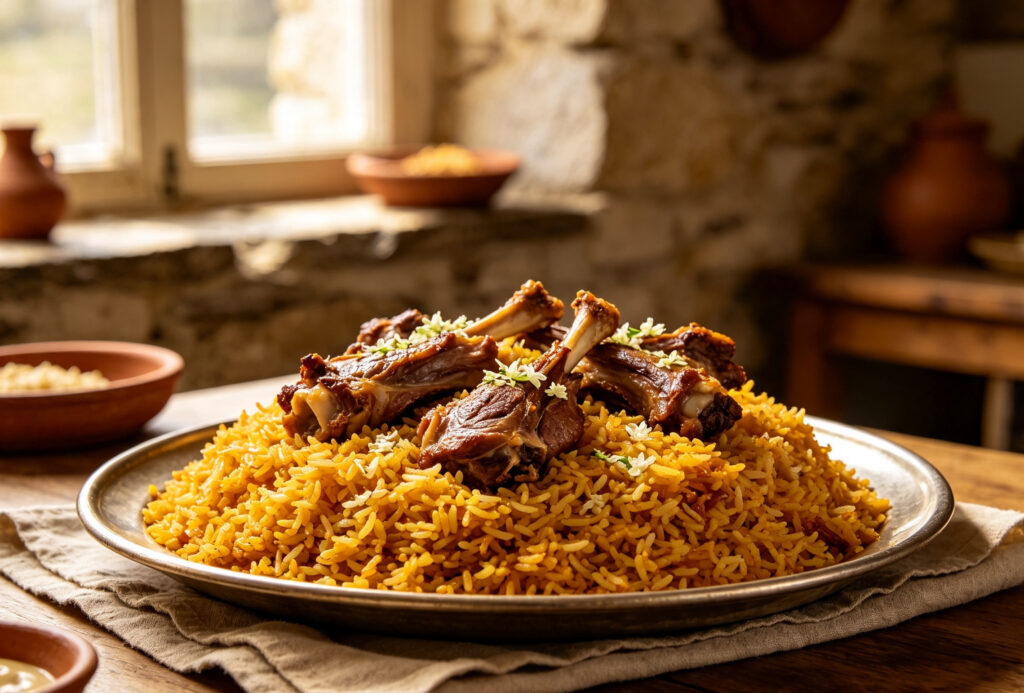
Yemeni Mandi
Ingredients
- 1 kg (2.2 lb) lamb shoulder or leg, bone-in, cut into large pieces
- 400 g (2 cups) basmati rice, rinsed and soaked for 20 minutes
- 2 onions, one sliced and one whole
- 4 garlic cloves, minced
- 1 tsp ground cumin
- 1 tsp ground coriander
- 1/2 tsp ground cardamom
- 1/2 tsp ground cinnamon
- 1/4 tsp ground cloves
- 3 tbsp vegetable oil or ghee
- 750 ml (3 cups) water or stock
- 2 bay leaves
- Salt and pepper, to taste
- Toasted almonds and raisins, to garnish (optional)
Method
- Season the lamb generously with salt, pepper, cumin, coriander, cardamom, cinnamon and cloves.
- Heat the oil or ghee in a large pot over medium-high heat and brown the lamb on all sides, about 10 minutes.
- Add the sliced onion, garlic, whole onion and bay leaves, then add the water or stock. Bring to a simmer, cover, and cook over low heat for 1.5-2 hours, until the lamb is extremely tender.
- Remove the lamb from the pot and transfer to a roasting tray. Place under a hot grill or in a very hot oven (220°C/425°F) for 10-15 minutes, until the exterior is deeply browned and slightly charred, to mimic the traditional smoky pit-cooked flavour.
- Meanwhile, strain the cooking liquid, reserving it as stock. Cook the soaked rice in this reserved stock according to package instructions, usually about 15-18 minutes, until tender and fragrant.
- Fluff the rice and spread onto a large serving platter. Top with the roasted lamb pieces.
- Garnish with toasted almonds and raisins if using, and serve hot.
Introduction: Mandi, a dish of fragrant spiced rice topped with tender, slow-cooked lamb, is one of Yemen’s most iconic and widely loved dishes.
Cultural Background: Mandi, a dish of fragrant spiced rice topped with tender, slow-cooked lamb, is one of Yemen’s most iconic and widely loved dishes. Traditionally cooked in an underground pit oven (tandoor-style) for a distinctive smoky flavour, it’s a centerpiece dish for family meals, gatherings and celebrations across the country.
Tips: Browning the lamb both before and after simmering builds the deep, complex flavour central to good mandi. Cooking the rice in the meat’s own stock infuses it with rich flavour — don’t skip this step. A brief stint under a hot grill mimics the smoky char of a traditional pit oven.
Variations: Use chicken in place of lamb for a lighter, quicker version (zurbian is a related chicken-based dish). Add a few strands of saffron to the rice for extra colour and aroma. Serve with a side of sahawiq (fresh chilli relish) for added heat. Not applicable in its traditional form; the dish is defined by slow-cooked lamb and rice cooked in meat stock.
Storage: Refrigerate in an airtight container for up to 3 days, or freeze for up to 2 months.
Reheating: Reheat the rice and lamb separately, covered, in a low oven at 160°C (325°F) until warmed through, adding a splash of water to the rice if needed.
Nutrition: Per serving (approx.): 620 kcal, 38 g protein, 55 g carbohydrates, 26 g fat, 3 g fibre.
FAQs:
Q: Do I need a traditional pit oven to make mandi at home?
A: No, this recipe achieves a similar smoky char using a hot oven or grill to finish the lamb after simmering.
Q: Can I use chicken instead of lamb?
A: Yes, though this creates more of a zurbian-style dish; adjust cooking time down significantly since chicken cooks much faster.
Q: What rice works best for mandi?
A: A good-quality basmati rice is traditional, prized for its long grains and fragrant aroma.
Please log in to leave a comment.