
Mains
Romazava
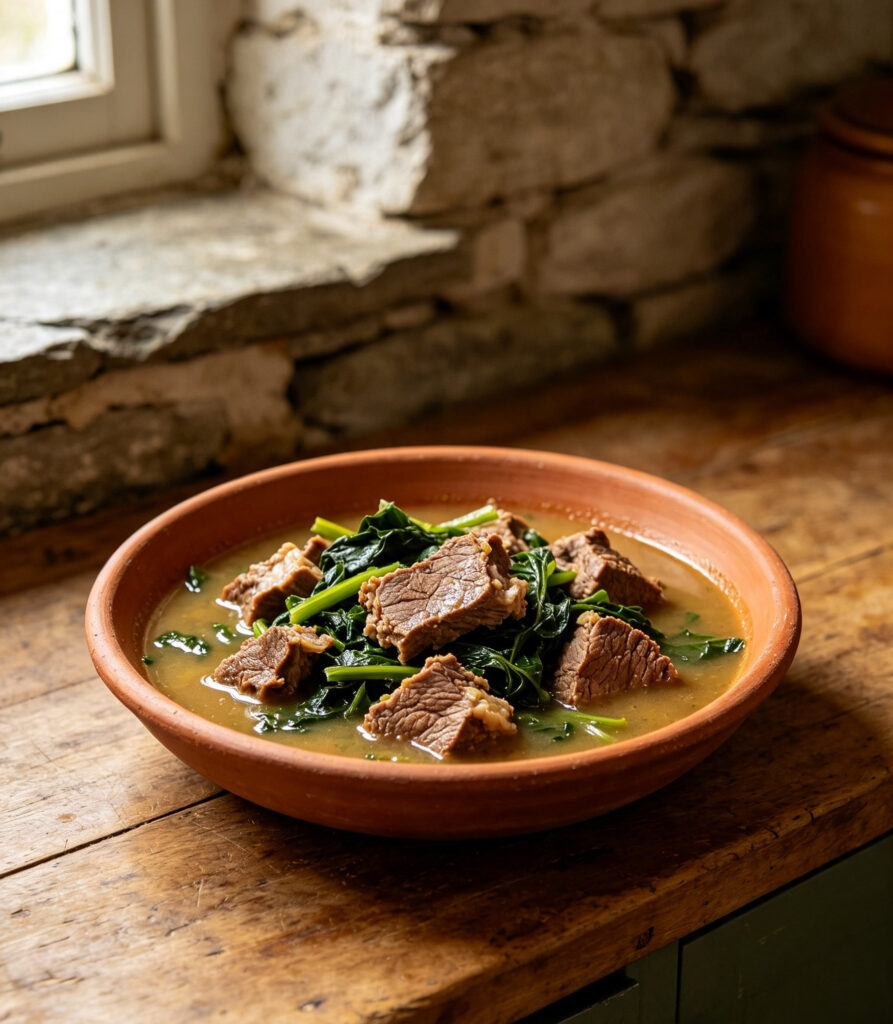
Ingredients
- 680g (1.5 lb) Beef, cubed (chuck or brisket)
- 4 cups Mixed leafy greens (brèdes mafana, watercress, or spinach), shredded
- 1 Onion, chopped
- 3 cloves Garlic, minced
- 2.5cm (1-inch) piece Fresh ginger, minced
- 2 Tomatoes, chopped
- 30ml (2 tbsp) Vegetable oil
- 1 tsp Salt
- 1/2 tsp Black pepper
- 950ml (4 cups) Water or beef broth
Method
- Heat the oil in a large pot and brown the beef on all sides.
- Add the onion, garlic, and ginger, and cook until fragrant.
- Stir in the tomatoes, salt, and pepper, and cook for 3 minutes.
- Pour in the water or broth, bring to a boil, then reduce to a simmer.
- Cover and cook for 45 minutes to an hour until the beef is very tender.
- Add the shredded greens and simmer uncovered for 10 more minutes until wilted and tender.
- Serve hot over rice.
Introduction: Romazava is widely regarded as Madagascar's national dish: a fragrant beef and leafy-green stew built on ginger, garlic, and whatever greens are freshest at the market.
Cultural Background: Traditionally it includes a peppery local green called brèdes mafana, prized for the tingling numbness it leaves on the tongue, though watercress or spinach make fine substitutes outside Madagascar.
Tips: A long, slow simmer is essential for tender beef; do not rush this step.
Variations: Zebu beef (Madagascar's native cattle) is traditional; regular beef chuck works well as a substitute. Some versions include a mix of two or three different greens.
Storage: Refrigerate for up to 3 days; flavor improves overnight.
Reheating: Reheat gently on the stovetop, adding a splash of water if needed.
Nutrition: Approx. 380 kcal, 32g protein, 9g carbohydrates, 22g fat per serving.
FAQs:
Q: What are brèdes mafana?
A: They are a peppery, slightly numbing local green traditional to romazava; watercress or mustard greens are the closest widely available substitutes.
Q: Is romazava spicy?
A: The dish itself is not spicy; heat is added at the table with sakay sauce to taste.
Please log in to leave a comment.