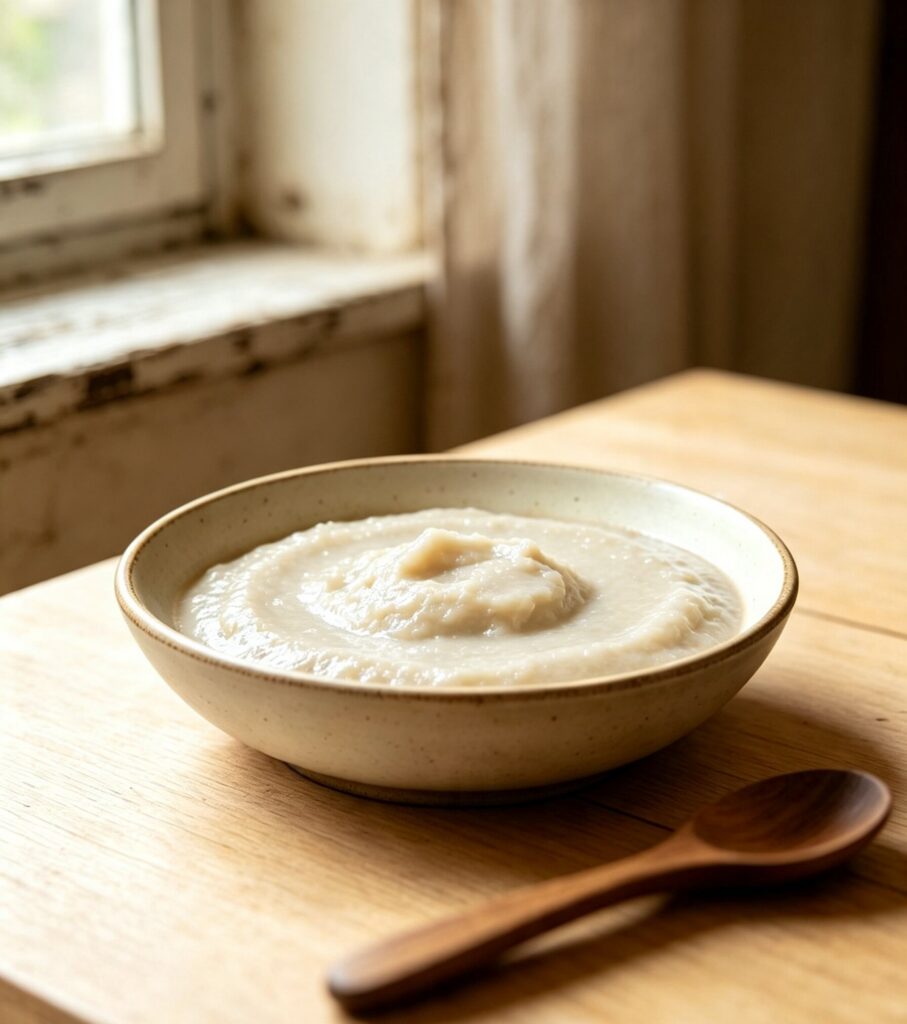
Liberian Cassava Farina Porridge
The Quirky Foodster Team
Ingredients
- Cassava farina (garri) — 150 g (1 cup)
- Whole milk (or water for a vegan version) — 500 ml (2 cups)
- Granulated sugar, or to taste — 60 g (1/4 cup)
- Ground nutmeg — 1/4 tsp
- Of salt — pinch
- Evaporated milk, for serving (optional) — 60 ml (1/4 cup)
Method
- Bring the milk (or water) to a gentle boil in a medium saucepan with the salt and nutmeg.
- Reduce heat to low and slowly whisk in the farina in a steady stream to avoid lumps.
- Stir continuously for 3-4 minutes until the mixture thickens to a smooth, pourable porridge.
- Stir in the sugar and adjust consistency with a splash more milk or water if too thick.
- Ladle into bowls and top with a drizzle of evaporated milk before serving.
Introduction: Farina in Liberia refers to coarsely ground, roasted cassava granules — a close cousin of gari found across West Africa.
Cultural Background: Farina in Liberia refers to coarsely ground, roasted cassava granules — a close cousin of gari found across West Africa. Stirred into hot milk or water with sugar, it becomes a quick, filling breakfast porridge eaten by children and adults alike before school or farm work, often alongside fried plantain.
Tips: Whisk continuously as you add the farina — this is the key step that prevents clumping. Taste the farina brand you're using first; some are coarser and need slightly more liquid.
Variations: Use coconut milk in place of dairy milk for a richer, dairy-free version. Stir in mashed ripe banana for natural sweetness and extra body.
Storage: Best eaten fresh; leftovers can be refrigerated in an airtight container for up to 1 day.
Reheating: Reheat gently on the stove with a splash of milk or water, stirring to loosen the texture.
FAQs:
Q: Is farina the same as gari?
A: Yes — farina is the Liberian term for the same roasted, granulated cassava product known as gari elsewhere in West Africa.
Q: Can I make this without dairy?
A: Yes, water or any plant-based milk works well.
- Cassava farina (garri) — 150 g (1 cup)
- Whole milk (or water for a vegan version) — 500 ml (2 cups)
- Granulated sugar, or to taste — 60 g (1/4 cup)
- Ground nutmeg — 1/4 tsp
- Of salt — pinch
- Evaporated milk, for serving (optional) — 60 ml (1/4 cup)
Please log in to leave a comment.