
Soups
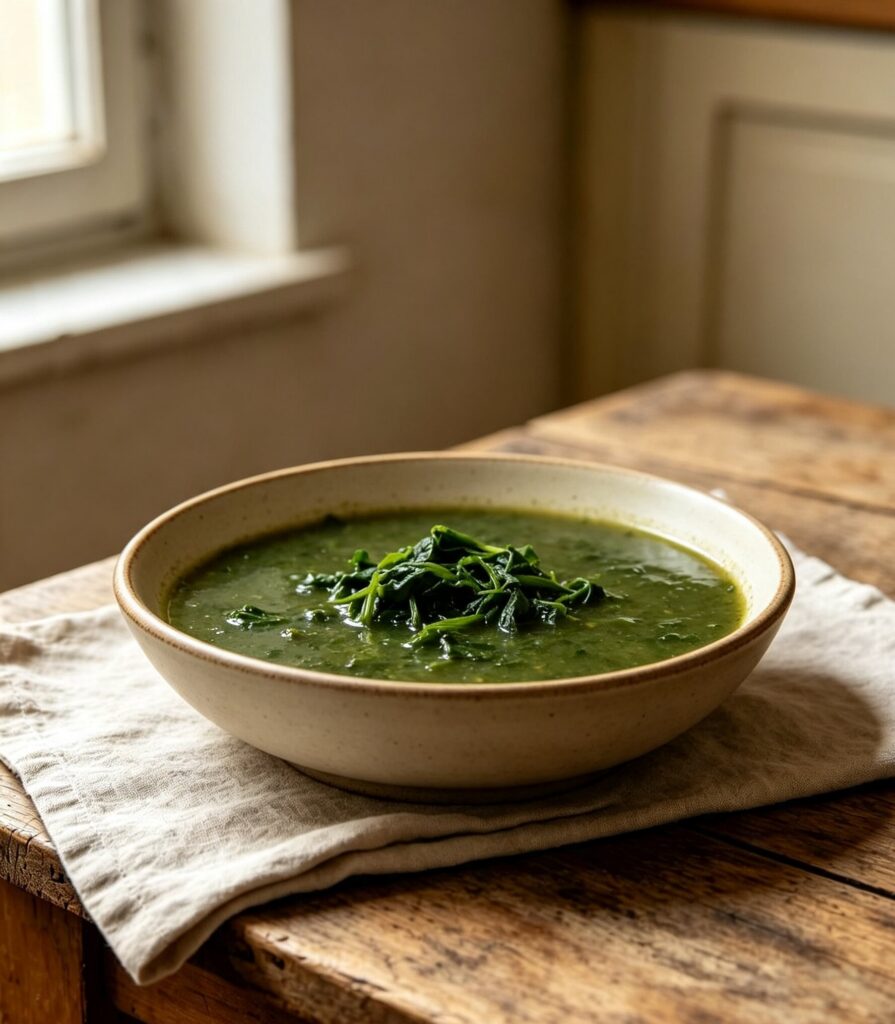
Seroto Soup (Wild Nightshade Greens Soup)
Ingredients
- 500 g fresh seroto (black nightshade) leaves, or spinach as a substitute, washed and roughly chopped
- 750 ml (3 cups) water
- 1 tbsp sunflower oil
- 1 onion, finely chopped
- 2 tomatoes, chopped
- 1 small potato, peeled and diced
- 1/2 tsp salt, plus more to taste
- Pinch of bicarbonate of soda (helps soften tougher wild leaves)
Method
- Wash the leaves thoroughly in several changes of water to remove any grit.
- Heat the oil in the pot and soften the onion for 3–4 minutes over medium heat.
- Add the tomatoes and cook until pulpy, about 5 minutes.
- Add the potato, water, salt and bicarbonate of soda, bring to a boil, then reduce to a simmer for 10 minutes.
- Stir in the chopped leaves, cover and simmer for a further 20–25 minutes until the leaves and potato are completely tender and the soup has thickened slightly.
- Taste and adjust seasoning, then serve hot as a light soup or ladled over papa.
Introduction: Seroto refers to the leaves of the black nightshade plant, a wild green foraged widely across the fields and hillsides of Lesotho during the rainy season.
Cultural Background: Seroto refers to the leaves of the black nightshade plant, a wild green foraged widely across the fields and hillsides of Lesotho during the rainy season. Simmered down into a soft, savoury soup, it is a dish deeply tied to subsistence farming life and the seasonal rhythm of foraging that has sustained rural Basotho households for generations.
Tips: Only ripe, dark leaves of the black nightshade plant should be foraged and eaten; unripe green berries are not used. The bicarbonate of soda helps break down tougher wild greens more quickly without long cooking.
Variations: Pumpkin leaves or spinach make a reliable year-round substitute where wild seroto is unavailable. A spoonful of ground peanuts is stirred in by some households for a richer, nuttier soup. Already vegetarian and vegan as written.
Storage: Refrigerate up to 2 days in an airtight container.
Reheating: Reheat gently in a covered saucepan over low heat with a splash of water.
FAQs:
Q: Is nightshade safe to eat?
A: Yes, the cooked leaves of black nightshade (Solanum nigrum) are widely and safely eaten across Southern Africa when properly identified and cooked; only the unripe berries and other nightshade species should be avoided.
Q: Can I use frozen spinach instead?
A: Yes, thaw and drain it well before adding.
Please log in to leave a comment.