
Street Food
Rye Crust Carrot Tart (Sklandrausis)
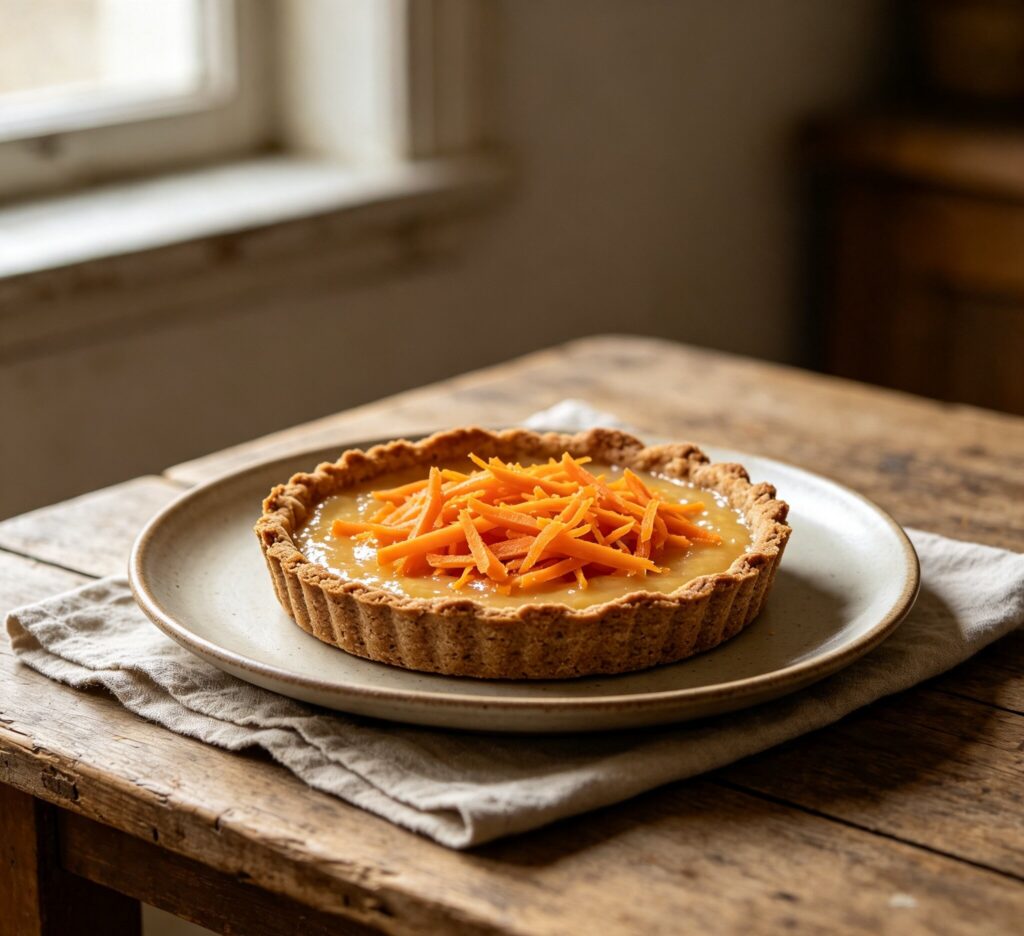
Ingredients
- 250 g (2 cups) rye flour
- 1/2 tsp caraway seeds
- 1/2 tsp salt
- 100 ml (1/3 cup) water
- 2 tbsp sunflower oil
- 400 g (14 oz) carrots, peeled and grated
- 200 g (7 oz) potatoes, peeled and boiled
- 2 tbsp honey
- 1 tbsp sour cream
- 1/4 tsp ground cinnamon
Method
- Combine the rye flour, caraway seeds and salt in a bowl, then work in the water and oil to form a firm dough. Rest for 20 minutes.
- Simmer the grated carrot in a little water for 8-10 minutes until soft, then drain well.
- Mash the boiled potato and mix with the softened carrot, honey, sour cream and cinnamon until smooth.
- Roll the rye dough thinly and cut into circles, pressing each into a small tart ring or muffin tin to form a shallow crust with raised edges.
- Fill each crust generously with the carrot and potato mixture.
- Bake at 200°C (400°F) for 20-25 minutes until the filling is set and the edges golden.
- Cool slightly before removing from the tins and serving warm or at room temperature.
Introduction: A protected traditional dish with roots in the Livonian coastal communities of western Latvia, sklandrausis pairs a thin rye-and-caraway crust with a sweet carrot and potato filling.
Cultural Background: A protected traditional dish with roots in the Livonian coastal communities of western Latvia, sklandrausis pairs a thin rye-and-caraway crust with a sweet carrot and potato filling. Once a rustic farmhouse treat, it now appears at food markets and festivals across the country, sold from stalls as a distinctive handheld snack.
Tips: The rye dough is quite firm and low in gluten, so patch any cracks with dampened fingers rather than re-rolling excessively.
Variations: A version using swede (rutabaga) in place of some of the carrot is also found in certain regions of western Latvia.
Storage: Store in an airtight container at room temperature for up to 2 days.
Reheating: Warm briefly in an oven at 160°C (320°F) for 5-8 minutes.
FAQs:
Q: Is sklandrausis sweet or savoury?
A: It sits pleasantly between the two, with a mildly sweet, earthy filling in a savoury rye crust.
Q: Where does this dish traditionally come from?
A: It originates from the Livonian coast of the Kurzeme region in western Latvia.
Please log in to leave a comment.