
Mains
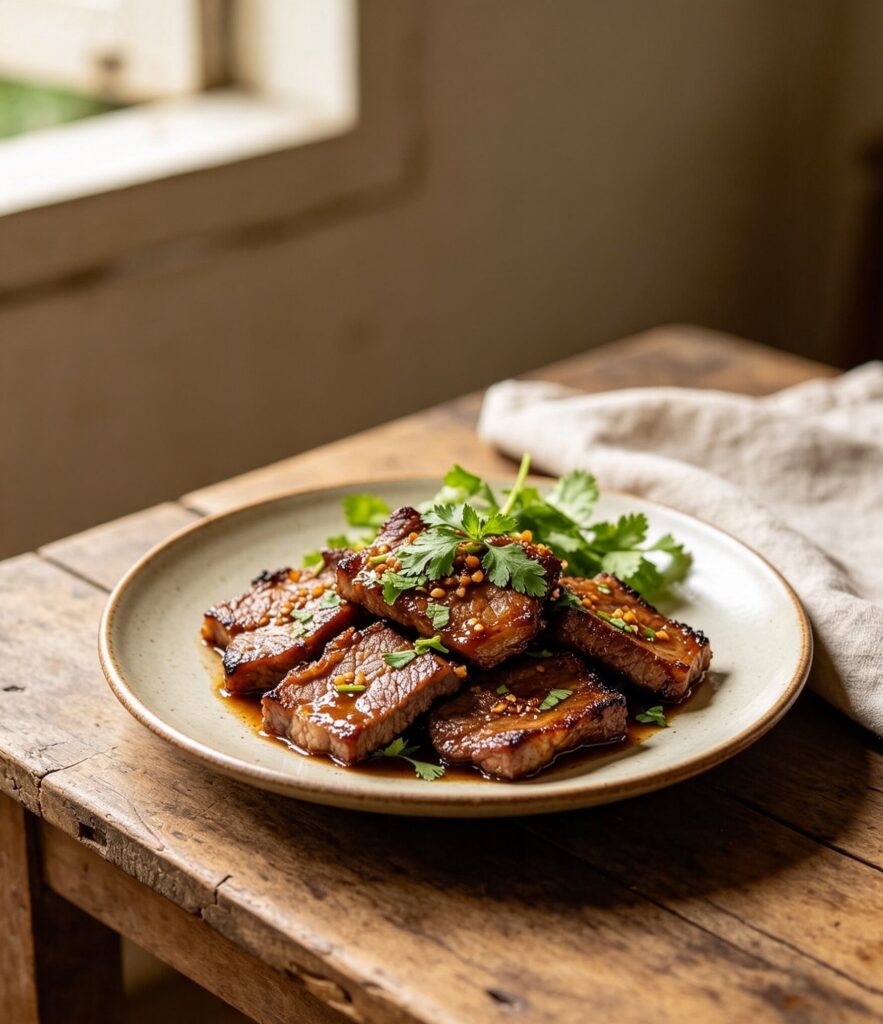
Sin Savanh
Ingredients
- 500 g (1.1 lb) beef, thinly sliced
- 2 tbsp fish sauce
- 2 tbsp palm sugar or brown sugar
- 1 tbsp oyster sauce
- 1 tsp ground white pepper
- 2 garlic cloves, minced
- 1 tbsp sesame seeds
- vegetable oil, for frying
Method
- Combine beef slices with fish sauce, palm sugar, oyster sauce, white pepper and garlic in a bowl.
- Marinate for at least 2 hours, or overnight for best flavour.
- Lay the marinated beef slices on a rack and dry in the sun or a low oven (around 60°C/140°F) for 4-6 hours until firm and leathery.
- Sprinkle dried beef with sesame seeds.
- Shallow-fry the dried beef in hot oil for 1-2 minutes per side until crisp at the edges.
- Serve with sticky rice and a chilli dipping sauce.
Introduction: Sin Savanh is Laos's version of sweet marinated dried beef, sun-dried or air-dried and then fried or grilled until crisp at the edges.
Cultural Background: Sin Savanh is Laos's version of sweet marinated dried beef, sun-dried or air-dried and then fried or grilled until crisp at the edges. Popular as a beer snack and a hearty main alongside sticky rice, it showcases the Lao technique of preserving meat through drying, historically important before refrigeration was common.
Tips: A low oven with the door slightly ajar works well if sun-drying isn't practical. Fry in small batches to keep the oil hot and the beef crisp rather than soggy.
Variations: Some versions use pork instead of beef. A spicier version adds chilli flakes to the marinade.
Storage: Store dried (unfried) beef in an airtight container for up to 2 weeks; fry just before serving.
Reheating: Re-fry briefly or warm in a low oven to restore crispness.
FAQs:
Q: Can I skip the drying step?
A: Drying is essential to the dish's signature chewy-crisp texture, but a marinated quick-fry version can be made in a pinch.
Q: Is this the same as beef jerky?
A: It's related in technique but sweeter and typically fried rather than eaten dried.
Please log in to leave a comment.