
Mains
Beshbarmak, Kyrgyz Style
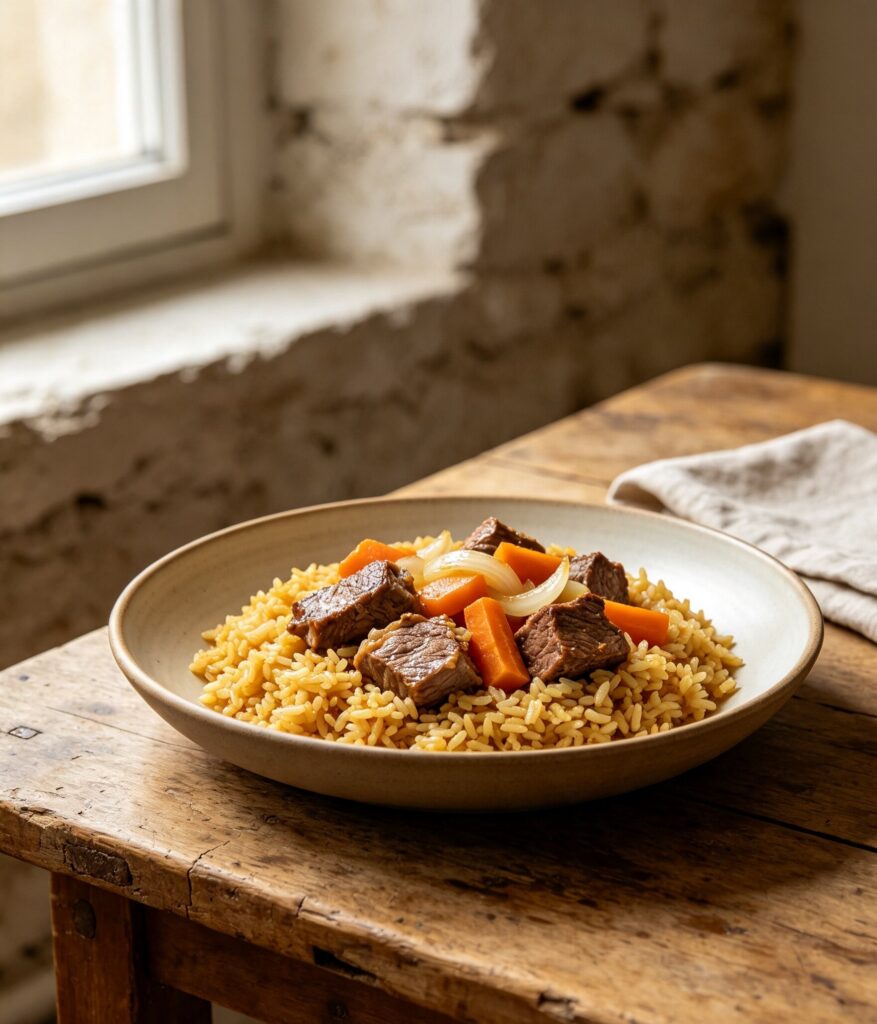
Ingredients
- 1 kg (2.2 lb) lamb or beef, bone-in, cut into large pieces
- 2 litres (8 cups) water
- 2 onions, one whole and one thinly sliced
- 1 tsp black peppercorns
- 2 bay leaves
- 400 g (3 1/4 cups) plain flour, for noodle dough
- 2 eggs
- 150 ml (2/3 cup) water, for dough
- 1/2 tsp salt, for dough
- 200 g (7 oz) chuchuk sausage, sliced (see Chuchuk recipe)
- Fresh dill and parsley, chopped, to serve
- Salt and black pepper, to taste
Method
- Place the meat, whole onion, peppercorns, and bay leaves in a large pot, cover with water, and bring to the boil, skimming off foam.
- Reduce to a gentle simmer and cook for 2-2.5 hours, until the meat is very tender and falling from the bone.
- While the meat cooks, make the dough by combining flour, eggs, water, and salt into a firm dough; knead well and rest for 30 minutes.
- Roll the dough out thinly and cut into large squares or diamond shapes, about 8 cm (3 in) across.
- Remove the meat from the pot and set aside, keeping the broth at a simmer. Strain the broth if needed for clarity.
- Cook the dough pieces in the simmering broth for 5-6 minutes until tender, then remove with a slotted spoon.
- Shred or slice the cooked meat. Toss the cooked dough sheets with the sliced raw onion and a ladleful of hot broth to soften the onion.
- Arrange the dough on a large platter, top with the meat and sliced chuchuk sausage, and garnish with fresh dill and parsley.
- Serve the remaining hot broth in cups alongside the platter, to be sipped between bites.
Introduction: Beshbarmak, meaning 'five fingers' for the traditional way it is eaten by hand, is the national dish of Kyrgyzstan: wide sheets of boiled dough tossed with tender, slow-cooked meat and onion broth, served on a large communal platter.
Cultural Background: Beshbarmak, meaning 'five fingers' for the traditional way it is eaten by hand, is the national dish of Kyrgyzstan: wide sheets of boiled dough tossed with tender, slow-cooked meat and onion broth, served on a large communal platter. In the Kyrgyz tradition, it is served with chuchuk sausage and kuurdak-style fried meat on top, and the meat is portioned out by the host according to guests' status, making it as much a ceremony of hospitality as a meal.
Tips: Ladling hot broth over the raw sliced onion softens its sharpness and adds moisture to the dish; don't skip this step.
Variations: Some households add a layer of kuurdak (fried meat and onion) on top of the meat for extra richness. A horse meat version is considered especially festive.
Storage: Refrigerate components separately in airtight containers for up to 2 days.
Reheating: Reheat the meat and dough gently in a splash of the reserved broth over low heat until warmed through.
FAQs:
Q: Why is it called 'five fingers'?
A: The dish is traditionally eaten by hand, without cutlery, which is where the name 'beshbarmak', meaning five fingers, comes from.
Q: What's the difference between Kyrgyz and Kazakh beshbarmak?
A: The Kyrgyz version is typically served with sliced chuchuk sausage and sometimes kuurdak on top, and the broth is traditionally sipped from a separate cup rather than poured directly over the dish.
Please log in to leave a comment.