
Desserts
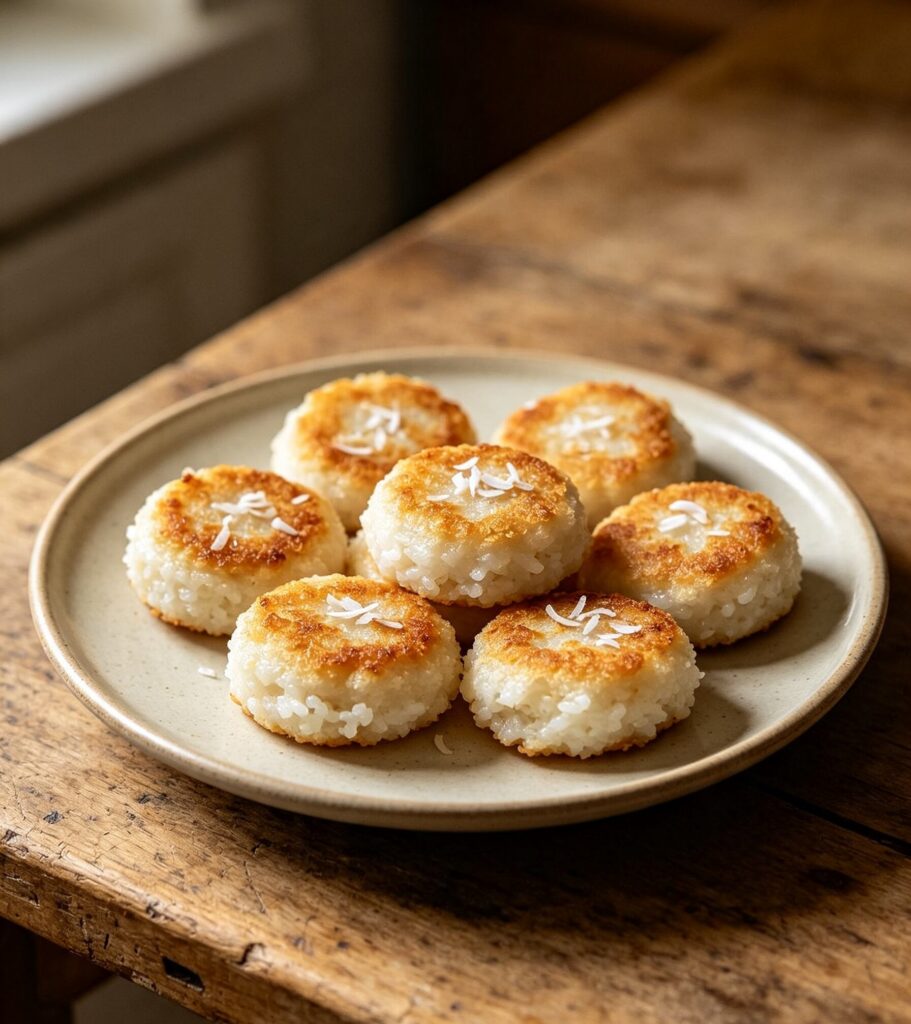
Vitumbua
Ingredients
- 300 g (1 1/2 cups) rice, soaked overnight
- 200 ml (3/4 cup) coconut milk
- 80 g (1/3 cup) sugar
- 1/2 tsp (2 g) instant yeast
- 1/4 tsp (1 g) ground cardamom
- Pinch of salt
- Vegetable oil, for frying
Method
- Drain the soaked rice and blend with the coconut milk until smooth, adding a little water if needed to form a thick, pourable batter.
- Stir in the sugar, yeast, cardamom and salt. Cover and let the batter rest in a warm place for 1-2 hours, until slightly bubbly.
- Heat a lightly oiled vitumbua pan (or small non-stick pan) over medium heat.
- Spoon 2-3 tablespoons of batter into each indentation (or pan), cooking for 2-3 minutes until bubbles form and the underside is golden.
- Flip and cook for another 1-2 minutes until cooked through and golden on both sides.
- Remove and repeat with the remaining batter, adding a little oil between batches.
Introduction: Vitumbua are small, spiced rice and coconut cakes fried until golden on the outside and soft within, a favourite sweet snack of the Swahili coast.
Cultural Background: Vitumbua are small, spiced rice and coconut cakes fried until golden on the outside and soft within, a favourite sweet snack of the Swahili coast. Traditionally cooked in a special dimpled pan, they are sold by street vendors and enjoyed at teatime or as a light dessert, especially during festive occasions.
Tips: Letting the batter ferment slightly gives Vitumbua their characteristic light, airy texture. A well-seasoned or non-stick pan is essential to prevent sticking. If a traditional vitumbua pan isn't available, a mini pancake or aebleskiver pan works well.
Variations: Some versions add a touch of vanilla or extra cardamom; a savoury version can be made by omitting sugar and adding chili. Naturally vegan and vegetarian as written.
Storage: Store in an airtight container at room temperature for up to 2 days.
Reheating: Warm briefly in a dry pan or toaster oven to restore texture; best enjoyed fresh.
FAQs:
Q: What is a vitumbua pan?
A: It is a special round pan with several small, deep indentations used to shape the cakes; similar pans are used for Danish aebleskiver or Japanese takoyaki.
Q: Can Vitumbua be made without yeast?
A: Yeast gives the characteristic light, spongy texture; without it, the cakes will be denser, though still enjoyable.
Please log in to leave a comment.