
Mains
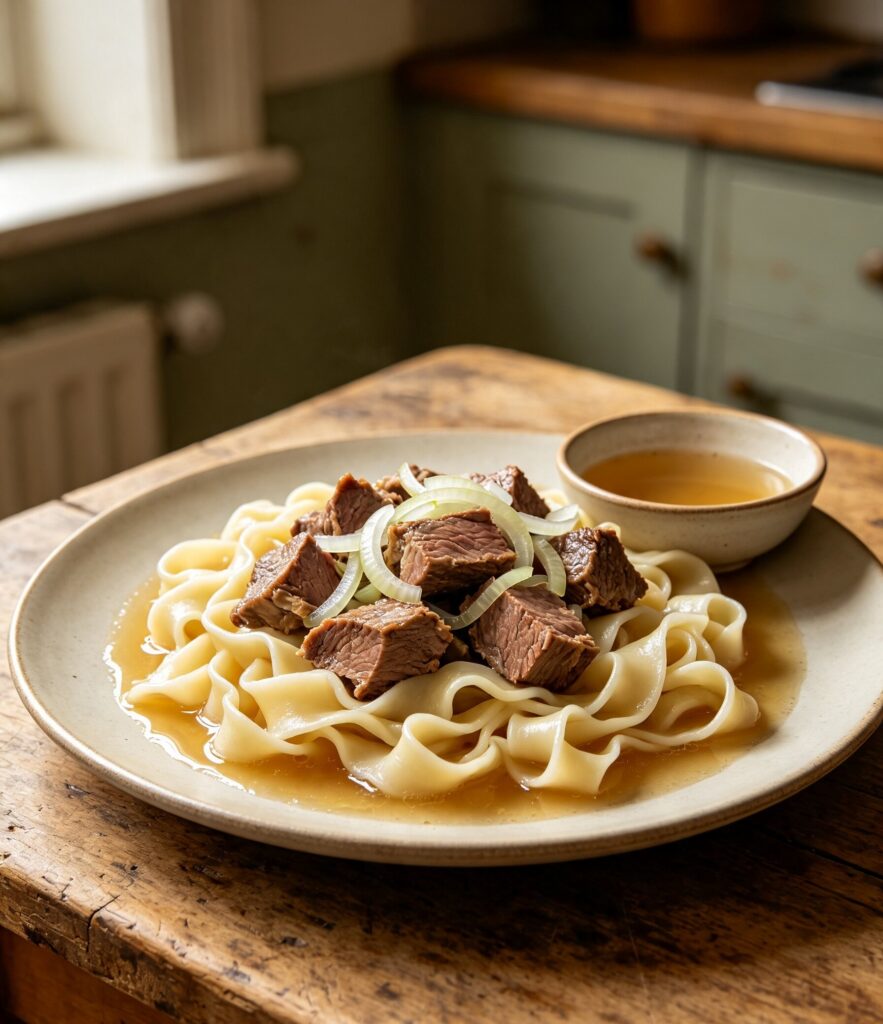
Beshbarmak
Ingredients
- 1.5 kg (3.3 lb) lamb or beef (shoulder or shank, bone-in)
- 500 g (1 lb) fresh wide pasta sheets (or flour and eggs to make dough)
- 3 large onions, thinly sliced
- 2 litres (8 cups) water
- 1 tbsp salt, or to taste
- 1 tsp black peppercorns
- 2 bay leaves
- 2 tbsp fresh dill or parsley, chopped
Method
- Place the meat in a large stockpot, cover with water, and bring to a boil, skimming off any foam.
- Add peppercorns and bay leaves, then reduce to a gentle simmer and cook for 2.5-3 hours until the meat is very tender and falls easily from the bone.
- Remove the meat and set aside, keeping the broth warm; season the broth with salt.
- Roll fresh pasta dough thin and cut into large diamond or square sheets, then boil in a portion of the broth for 4-5 minutes until tender; drain.
- Warm a portion of the sliced onions gently in a ladleful of hot broth for 2-3 minutes to soften slightly.
- Shred or slice the cooked meat off the bone.
- Arrange the pasta sheets on a large communal platter, top with the meat and softened onions, and pour a little broth over the top.
- Garnish with fresh dill or parsley and serve immediately with the remaining broth in small cups on the side.
Introduction: Beshbarmak, meaning 'five fingers' for the way it was traditionally eaten by hand, is Kazakhstan's national dish: tender boiled meat served over wide sheets of pasta with onions, all moistened with a rich broth.
Cultural Background: Beshbarmak, meaning 'five fingers' for the way it was traditionally eaten by hand, is Kazakhstan's national dish: tender boiled meat served over wide sheets of pasta with onions, all moistened with a rich broth. It is the centrepiece of weddings, funerals and major celebrations, with the choicest cuts and skull traditionally presented to the most honoured guest at the table.
Tips: Roll the pasta as thin as possible while keeping it sturdy enough to hold up in the broth. Traditionally the platter is shared communally and eaten by hand, though cutlery is now common in modern settings.
Variations: A beef-only version is common in urban households where lamb is less available. Some regions layer the noodles and meat in alternating layers rather than meat on top.
Storage: Refrigerate meat, noodles and broth separately in airtight containers for up to 2 days.
Reheating: Reheat the broth separately and pour hot over the meat and noodles just before serving.
FAQs:
Q: Why is beshbarmak called 'five fingers'?
A: The name refers to the traditional custom of eating the dish by hand using the fingers, without cutlery.
Q: Is beshbarmak always made with lamb?
A: Lamb and beef are both traditional, and horse meat is used in some regions; the choice often depends on local availability and the occasion.
Please log in to leave a comment.