
Mains
Sukiyaki (Simmered Beef Hot Pot)
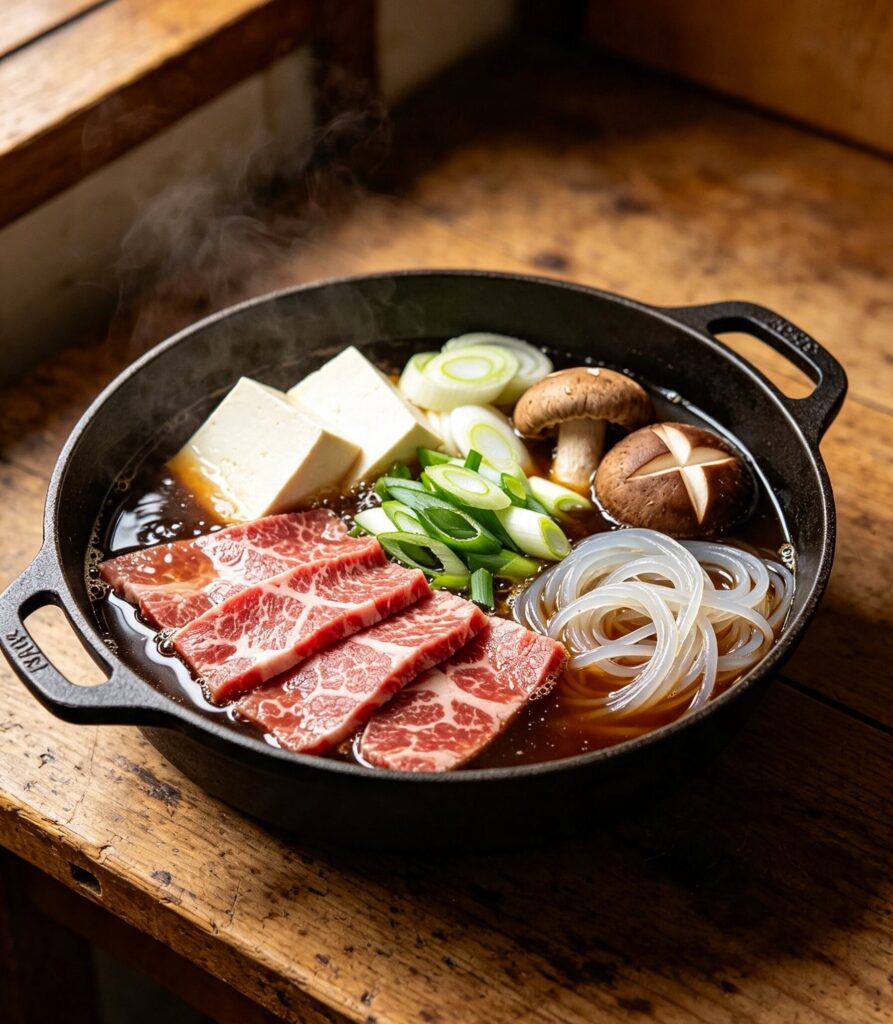
Ingredients
- 400 g thinly sliced beef (ribeye or sirloin), (14 oz)
- 200 g grilled tofu, cubed (7 oz)
- 1 leek, sliced diagonally
- 150 g shiitake mushrooms, halved (5 oz)
- 150 g shirataki noodles, drained (5 oz)
- 1 bunch shungiku (chrysanthemum greens) or spinach
- 100 ml soy sauce (1/3 cup + 1 tbsp)
- 100 ml mirin (1/3 cup + 1 tbsp)
- 50 g sugar (1/4 cup)
- 100 ml water or dashi (1/3 cup + 1 tbsp)
- 1 tbsp beef fat or neutral oil
- 4 raw eggs, for dipping (optional)
Method
- Combine soy sauce, mirin, sugar and water/dashi in a small pot to make the warishita sauce; warm gently until sugar dissolves.
- Heat a shallow hot pot over medium heat and melt beef fat.
- Sear a few slices of beef briefly, then push to one side.
- Add leek, mushrooms, tofu and shirataki noodles to the pot.
- Pour in the warishita sauce to partially cover ingredients and bring to a gentle simmer.
- Add shungiku or spinach last, cooking briefly until wilted.
- Serve pieces directly from the pot, dipping in a small bowl of raw beaten egg if desired, replenishing sauce and ingredients as the meal continues.
Introduction: Sukiyaki is a communal hot pot dish of thinly sliced beef simmered with vegetables and tofu in a sweet soy-based sauce (warishita), traditionally cooked at the table and dipped in raw beaten egg, often reserved for special gatherings.
Cultural Background: Sukiyaki is a communal hot pot dish of thinly sliced beef simmered with vegetables and tofu in a sweet soy-based sauce (warishita), traditionally cooked at the table and dipped in raw beaten egg, often reserved for special gatherings.
Tips: Keep the beef slices very thin (nearly translucent) so they cook in seconds without toughening.
Variations: Kansai-style sukiyaki sears beef first with sugar and soy sauce directly, while Kanto-style prepares the warishita sauce separately, as above.
Storage: Refrigerate leftover components separately for up to 1 day; raw egg dip should not be stored.
Reheating: Reheat gently in a pot on the stovetop; avoid boiling beef too long to prevent toughening.
FAQs:
Q: Is raw egg necessary?
A: It is traditional but optional; the dish is still authentic without it.
Q: Can this be made without beef?
A: A vegetarian version can use extra tofu and mushrooms in place of beef, though this is a modern adaptation.
Please log in to leave a comment.