
Breakfast
Tamagoyaki (Japanese Rolled Omelette)
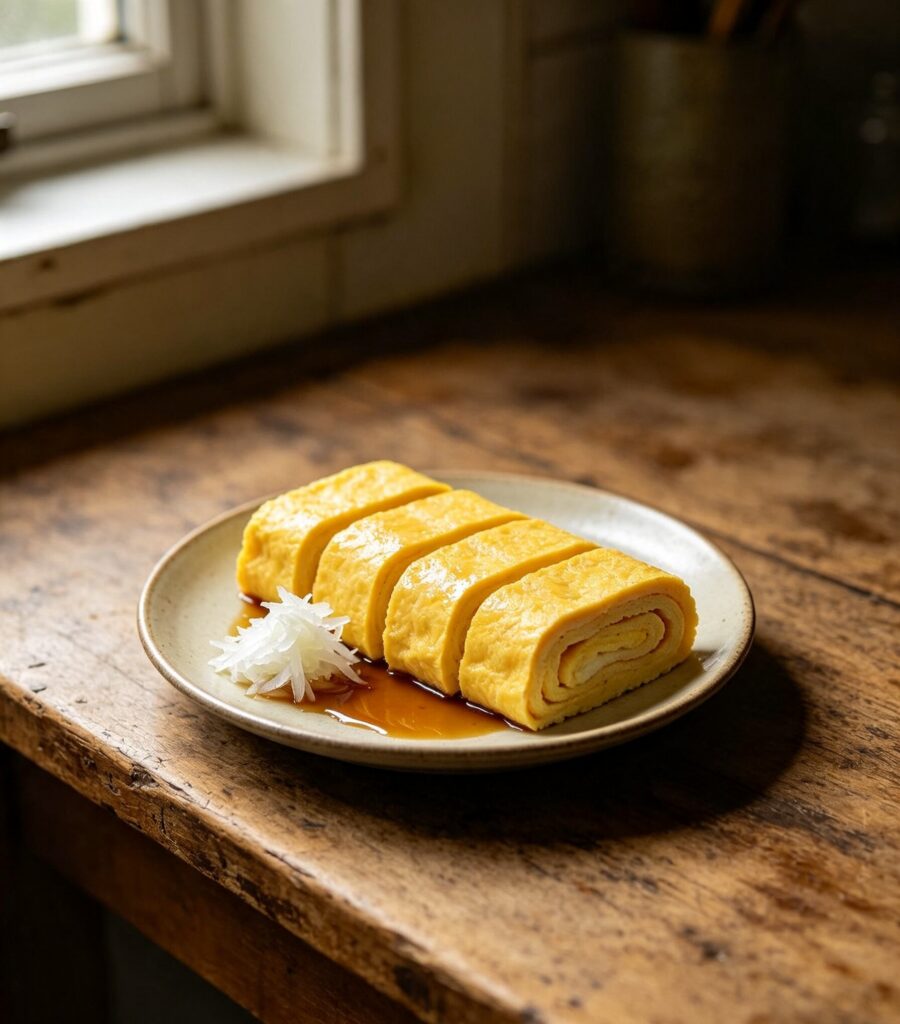
Ingredients
- 4 large eggs
- 60 ml dashi stock (1/4 cup)
- 1 tbsp soy sauce
- 1 tbsp mirin
- 1 tsp sugar
- 1/4 tsp salt
- 1 tbsp neutral oil (for greasing pan)
Method
- Whisk eggs, dashi, soy sauce, mirin, sugar and salt together until just combined; avoid over-beating.
- Heat the tamagoyaki pan over medium heat and lightly oil with a folded paper towel.
- Pour a thin layer of egg mixture into the pan, tilting to coat evenly.
- When the egg is mostly set but still slightly wet on top, roll it from one end to the other using chopsticks or a spatula.
- Push the rolled egg to one end, re-oil the pan, and pour in another thin layer, lifting the roll so the new layer flows underneath.
- Repeat rolling and layering until the egg mixture is used up, forming a multi-layered block.
- Slide onto a bamboo mat, shape into a neat rectangle while warm, then rest 2 minutes before slicing.
Introduction: Tamagoyaki is a sweet-savoury layered omelette rolled in a rectangular pan (makiyakinabe) and a staple of Japanese breakfast trays and bento boxes.
Cultural Background: Tamagoyaki is a sweet-savoury layered omelette rolled in a rectangular pan (makiyakinabe) and a staple of Japanese breakfast trays and bento boxes. Regional variations range from the sweeter Kanto-style to the more savoury, dashi-forward Kansai-style.
Tips: Keep the heat medium-low to prevent browning; a pale yellow, tender texture is the goal. Work quickly but gently on each layer.
Variations: Kansai-style uses more dashi for a softer, custard-like texture; some versions add grated nagaimo (mountain yam) for extra fluffiness.
Storage: Refrigerate cooled tamagoyaki in an airtight container for up to 2 days.
Reheating: Best served at room temperature or lightly warmed in a covered pan over low heat for 1-2 minutes to avoid drying out.
FAQs:
Q: Can I make tamagoyaki without a rectangular pan?
A: Yes, a small round non-stick pan works; simply trim the omelette into a rectangle after rolling.
Q: Is tamagoyaki always sweet?
A: No, sweetness varies by region and household; some versions are entirely savoury.
Please log in to leave a comment.