
Soups
Minestrone
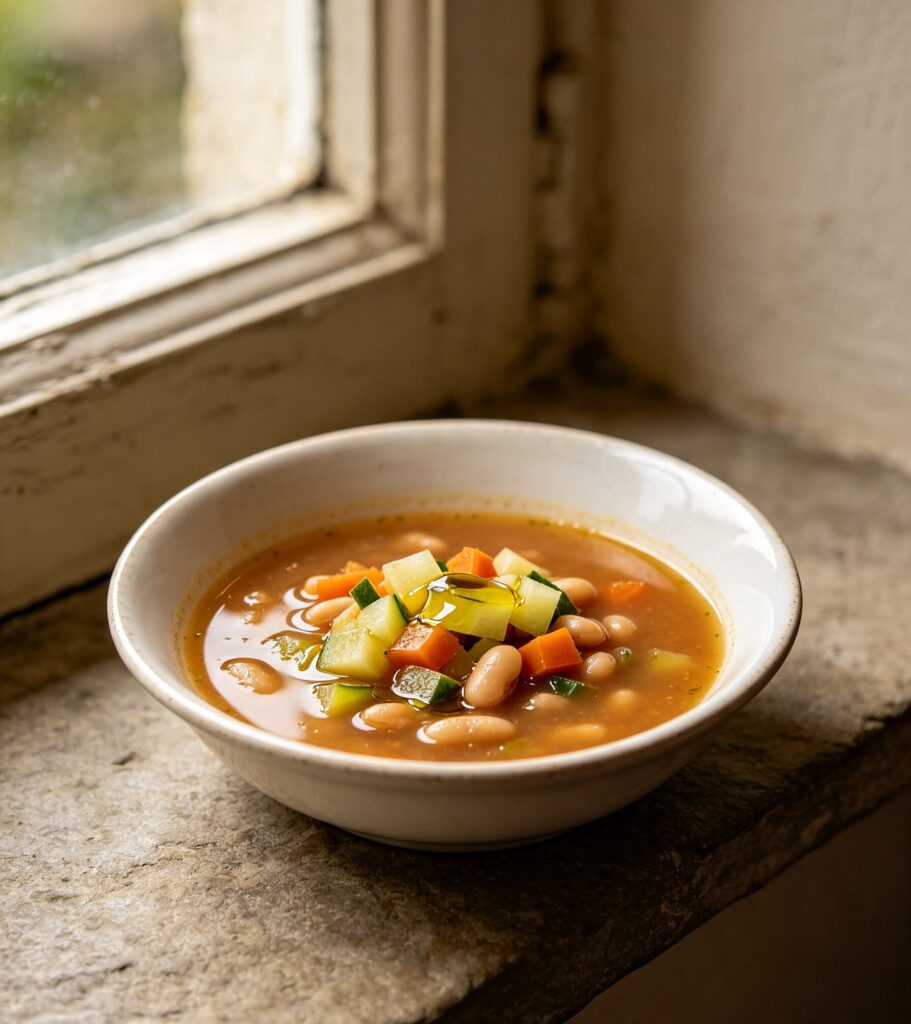
Ingredients
- 3 tbsp extra virgin olive oil
- 1 onion, diced
- 2 carrots, diced
- 2 celery stalks, diced
- 2 garlic cloves, minced
- 1 potato, diced
- 1 courgette (zucchini), diced
- 200 g (7 oz) canned chopped tomatoes
- 1.5 litres (6 cups) vegetable stock
- 400 g (14 oz) canned cannellini beans, drained
- 100 g (3.5 oz) small pasta (ditalini or similar)
- 100 g (3.5 oz) shredded green cabbage or kale
- 1 parmesan rind (optional)
- Salt and pepper, to taste
- Grated Parmigiano Reggiano, to serve
Method
- Heat olive oil in a large pot and sauté onion, carrot and celery until softened, about 8 minutes.
- Add garlic and cook 1 minute, then add potato, courgette and tomatoes; stir to combine.
- Pour in the stock, add the parmesan rind if using, and bring to a simmer.
- Cook 20 minutes, then add beans, pasta and cabbage; simmer a further 10-12 minutes until pasta is tender.
- Season with salt and pepper, remove the parmesan rind, and serve hot with grated Parmigiano.
Introduction: Minestrone means simply 'big soup,' a humble peasant dish built from whatever vegetables were in season and on hand, dating back to ancient Roman times.
Cultural Background: Minestrone means simply 'big soup,' a humble peasant dish built from whatever vegetables were in season and on hand, dating back to ancient Roman times. There is no single fixed recipe — it changes region to region and household to household, always thick with vegetables, beans and often pasta or rice.
Tips: Add pasta only near the end so it doesn't turn mushy sitting in leftovers. A parmesan rind simmered in the broth adds deep savoury flavour.
Variations: Minestrone alla Genovese: finished with a spoonful of pesto. Vegan version: omit parmesan rind and cheese, or use a vegan hard-cheese alternative and vegetable stock.
Storage: Refrigerate up to 4 days; freezes well for up to 3 months (best without the pasta, added fresh on reheating).
Reheating: Reheat gently on the stovetop, adding a splash of water or stock as it thickens on standing.
Nutrition: Per serving: approx. 260 kcal, 11 g protein, 8 g fat, 38 g carbohydrate, 6 g sugar.
FAQs:
Q: Is minestrone always vegetarian?
A: Traditionally yes, though some regional versions add pancetta for extra flavour.
Q: Can I use different vegetables?
A: Absolutely — minestrone is meant to use up whatever seasonal vegetables are available.
Please log in to leave a comment.