
Soups
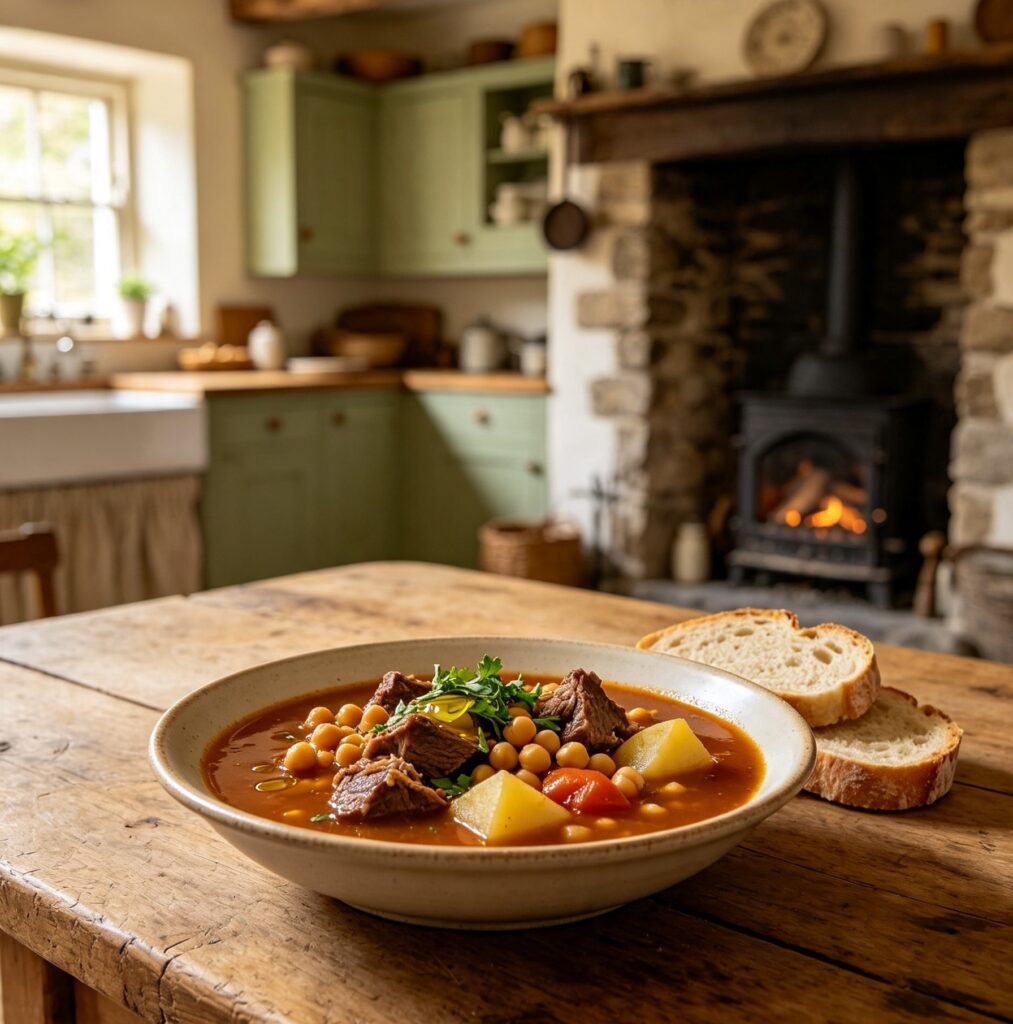
Abgoosht / Dizi (Lamb and Chickpea Stew-Soup)
Ingredients
- 600 g (1.3 lb) lamb shoulder or shank, cut into pieces
- 150 g (3/4 cup) chickpeas, soaked
- 100 g (1/2 cup) white beans, soaked
- 3 potatoes, peeled and halved
- 2 onions, chopped
- 2 tomatoes, chopped
- 1 tbsp tomato paste
- 1/2 tsp ground turmeric
- 1 dried lime (limoo amani), pierced
- Salt and pepper, to taste
Method
- Combine the lamb, chickpeas, beans, onions, tomatoes, tomato paste, turmeric and dried lime in a large pot with enough water to cover generously.
- Bring to a boil, skim off any foam, then reduce heat and simmer gently, covered, for 1.5 hours.
- Add the potatoes and continue simmering for 45-60 minutes more, until the meat is very tender and falling apart.
- Season with salt and pepper to taste.
- Strain the broth into a separate bowl or pot, serving it first with torn bread as a starter soup.
- Mash the remaining meat, potatoes, chickpeas and beans together with a masher until coarse and serve as the second course with more bread and fresh herbs.
Introduction: Abgoosht, also known by the clay pot it is traditionally cooked and served in (dizi), is a rustic lamb, chickpea and potato stew with deep roots in working-class Persian food culture.
Cultural Background: Abgoosht, also known by the clay pot it is traditionally cooked and served in (dizi), is a rustic lamb, chickpea and potato stew with deep roots in working-class Persian food culture. The broth is strained and eaten first with bread, followed by the meat and vegetables mashed together — a two-course ritual unique to this dish.
Tips: Piercing the dried lime before adding lets its tart, slightly bitter flavour infuse the broth fully. Traditional dizi pots allow the stew to cook slowly and evenly; a heavy Dutch oven is a good substitute.
Variations: Some versions include a marrow bone for extra richness in the broth. A quicker pressure-cooker method reduces total time to about 1 hour. Not typically made vegetarian, as the broth relies on lamb for its character; a vegetable-only version can be made with mushroom broth as a substitute.
Storage: Refrigerate in an airtight container for up to 3 days; freezes well for up to 2 months.
Reheating: Reheat gently on the stovetop with a splash of water until warmed through.
FAQs:
Q: What is a dried lime?
A: A whole lime dried until dark and hollow, used whole to add tartness to stews — widely available at Middle Eastern grocers.
Q: Why is the broth served separately?
A: It is a traditional two-course presentation dating back generations, believed to make the meal more satisfying.
Please log in to leave a comment.