
Mains
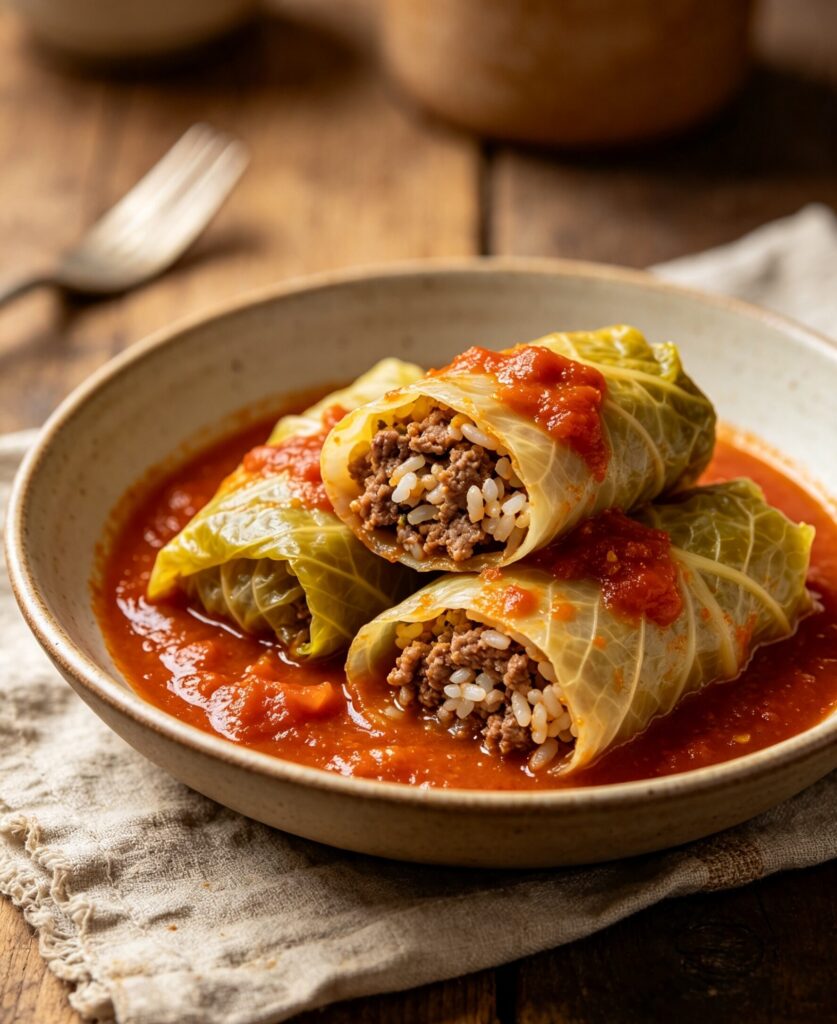
Toltott Kaposzta (Stuffed Cabbage)
The Quirky Foodster Team
Ingredients
- 1 large head fermented (sour) cabbage, leaves separated
- 500 g (1 lb) minced pork
- 100 g (1/2 cup) rice, parboiled
- 1 onion, finely chopped
- 1 egg
- 1 tbsp sweet paprika
- 500 g (18 oz) additional chopped sauerkraut
- 400 g (14 oz) chopped tomatoes
- 2 bay leaves
- Salt and pepper, to taste
- Sour cream, to serve
Method
- Mix minced pork, parboiled rice, onion, egg, paprika, salt and pepper into a filling.
- Place a portion of filling in each cabbage leaf and roll into tight parcels.
- Line the bottom of a large pot with some chopped sauerkraut.
- Arrange the cabbage rolls in the pot, layering with remaining sauerkraut and tomatoes.
- Add bay leaves and enough water to just cover; bring to a simmer.
- Cover and simmer gently 1.5-2 hours until the rice and cabbage are fully tender.
- Serve hot topped with sour cream.
Introduction: Fermented cabbage leaves wrapped around a rice and minced pork filling, slow-cooked in a paprika tomato broth, toltott kaposzta is a hearty winter dish especially associated with holidays and family gatherings across Hungary.
Cultural Background: Fermented cabbage leaves wrapped around a rice and minced pork filling, slow-cooked in a paprika tomato broth, toltott kaposzta is a hearty winter dish especially associated with holidays and family gatherings across Hungary.
Tips: Don't overfill the leaves; the rice will expand further during the long simmer.
Variations: Some families add smoked bacon or sausage between layers for extra flavour.
Storage: Refrigerate up to 4 days; flavour improves overnight. Freezes well up to 2 months.
Reheating: Reheat gently on the stovetop with a splash of water or in a covered oven dish.
Nutrition: Approx. 420 kcal, 24 g protein, 24 g fat, 26 g carbohydrate per serving.
FAQs:
Q: Can I use fresh cabbage instead of fermented?
A: Fermented cabbage gives the traditional sour depth; fresh cabbage can be used but the flavour will be milder.
Q: Is this a Christmas dish?
A: It's especially common around Christmas and New Year, though eaten throughout autumn and winter.
Please log in to leave a comment.