
Soups
Gulyasleves (Goulash Soup)
The Quirky Foodster Team
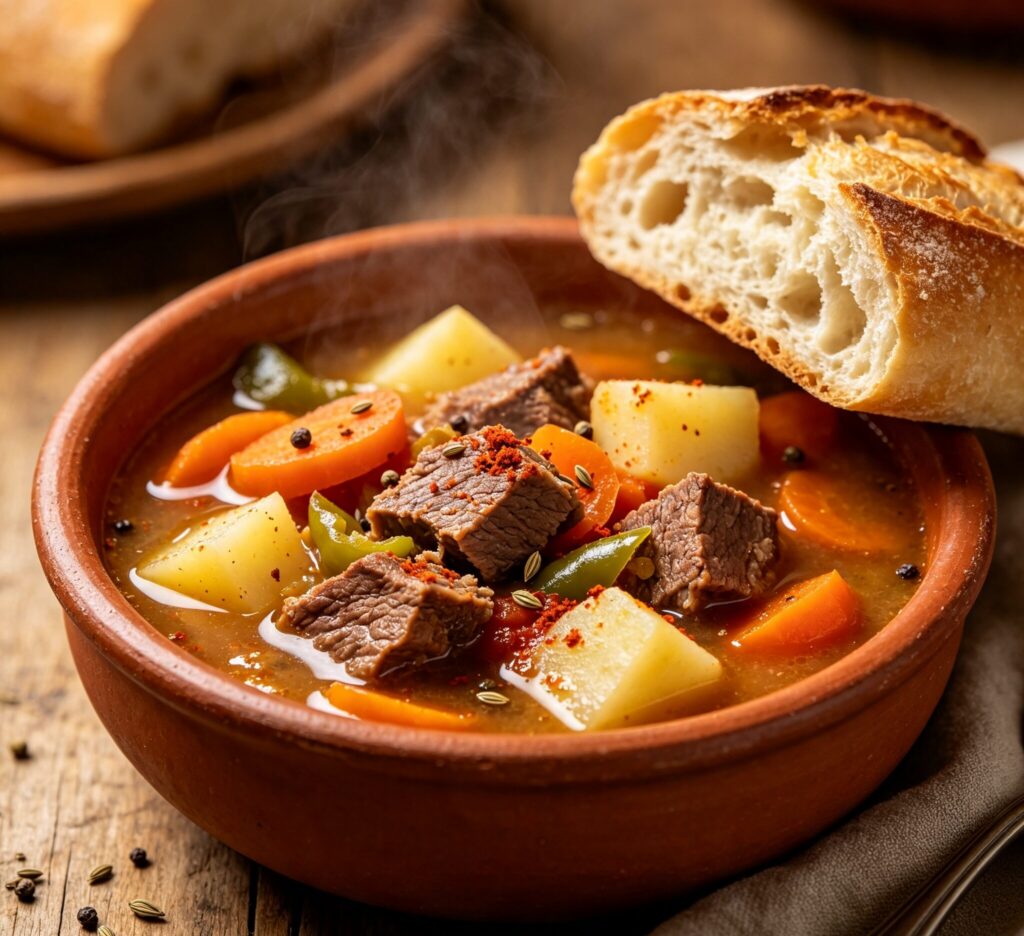
Ingredients
- 700 g (1.5 lb) beef chuck, cubed
- 2 onions, chopped
- 3 tbsp lard or oil
- 2 tbsp sweet paprika
- 1 tsp caraway seeds
- 2 cloves garlic, minced
- 2 carrots, sliced
- 2 parsnips, sliced
- 3 potatoes, cubed
- 2 tomatoes, chopped
- 1 green pepper, chopped
- 1.5 l (6 cups) beef stock or water
- Salt and pepper, to taste
- Csipetke (pinched noodles) or bread, to serve
Method
- Brown the beef in lard in batches, then set aside.
- Soften onions in the same pot; remove from heat and stir in paprika and caraway.
- Return beef to the pot with garlic and stock; bring to a simmer.
- Cover and simmer 1 hour, then add carrots and parsnips and simmer 30 minutes.
- Add potatoes, tomatoes and green pepper; simmer a further 25 minutes until all vegetables are tender.
- Season to taste and serve hot, with csipetke noodles stirred in or bread on the side.
Introduction: Hungary's national dish, gulyasleves began as a herdsman's kettle stew on the Great Plain and evolved into a paprika-rich beef and vegetable soup eaten nationwide; it is the strongest global culinary association with Hungary.
Cultural Background: Hungary's national dish, gulyasleves began as a herdsman's kettle stew on the Great Plain and evolved into a paprika-rich beef and vegetable soup eaten nationwide; it is the strongest global culinary association with Hungary.
Tips: Remove the pot from direct heat before adding paprika to prevent it turning bitter.
Variations: Some regions add a touch of chili for heat, or finish with a dollop of sour cream.
Storage: Refrigerate up to 4 days; freezes well up to 3 months.
Reheating: Reheat gently on the stovetop until piping hot throughout.
Nutrition: Approx. 380 kcal, 28 g protein, 16 g fat, 30 g carbohydrate per serving.
FAQs:
Q: Is gulyas a soup or a stew?
A: Traditional gulyasleves is a soup; the thicker stew version most non-Hungarians call goulash is closer to porkolt.
Q: What are csipetke?
A: Small pinched dumplings of flour and egg, traditionally torn by hand and dropped into the soup.
Please log in to leave a comment.