
Drinks
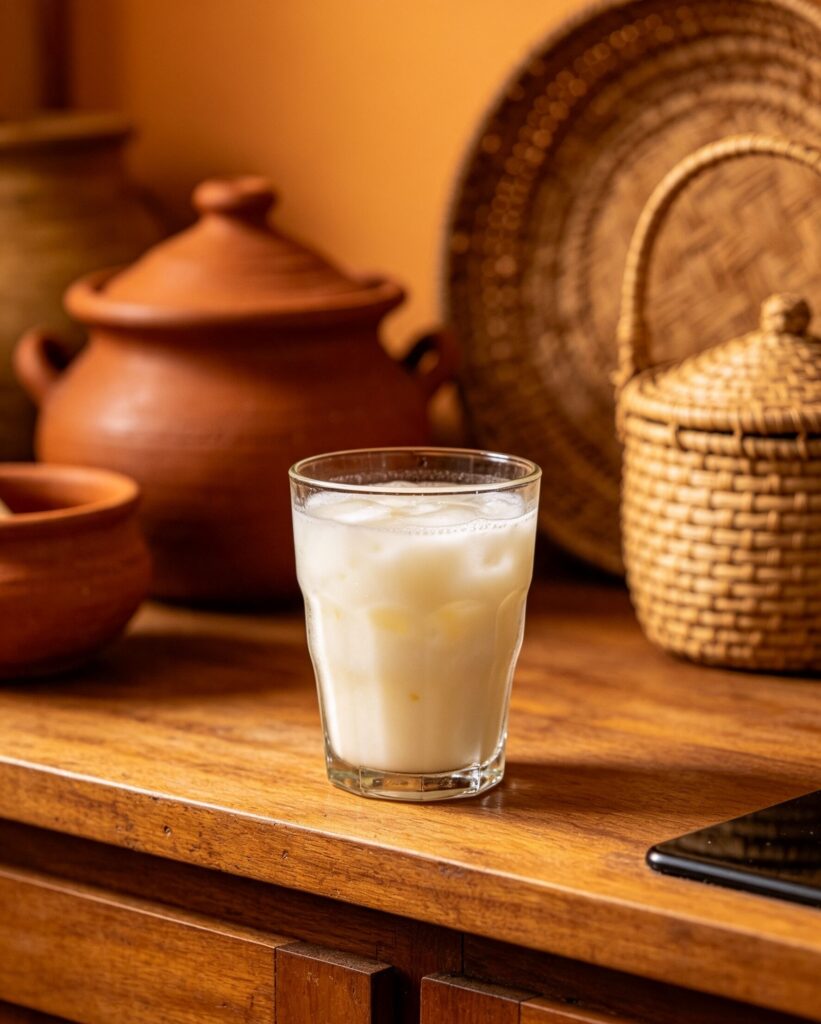
Vinho de Palma (Palm Wine)
The Quirky Foodster Team
Ingredients
- 1 (4 cups) litre fresh palm sap (or store-bought unpasteurised palm wine)
Method
- If using fresh palm sap, strain it through muslin cloth into a clean glass jar to remove debris.
- Cover loosely and leave at room temperature to ferment naturally for 24-48 hours, tasting periodically.
- Once it develops a pleasant tangy, slightly fizzy character, strain again and chill.
- Serve cold in small cups, as is traditional at ceremonies.
Introduction: Palm wine, tapped from the sap of palm trees and left to ferment naturally, is central to traditional ceremonies and weddings in Guinea-Bissau, historically tapped fresh each day by specialised palm wine tappers.
Cultural Background: Palm wine, tapped from the sap of palm trees and left to ferment naturally, is central to traditional ceremonies and weddings in Guinea-Bissau, historically tapped fresh each day by specialised palm wine tappers.
Tips: Palm wine ferments quickly and continues to sour, so it is traditionally consumed fresh, within a day or two of tapping.
Variations: Some regions drink it unfermented and fresh, known for its naturally sweet flavour before fermentation sets in. Already vegan as written; this is the base authentic version of the dish.
Storage: Best consumed within 1-2 days; continues fermenting and souring in the refrigerator.
Reheating: Not applicable — served chilled or at room temperature.
Nutrition: Approx. 60 kcal per 150ml serving, negligible protein and fat, 10g carbohydrate.
FAQs:
Q: Where can I find palm sap outside Guinea-Bissau?
A: Some African and Asian grocery stores sell canned or bottled palm wine as a substitute for fresh sap.
Q: Is palm wine always alcoholic?
A: Fermentation naturally produces alcohol over time; fresh, unfermented sap is not.
Please log in to leave a comment.