
Salads
Horiatiki
The Quirky Foodster Team
Ingredients
- 4 (4) ripe tomatoes, cut into wedges
- 1 (1) cucumber, sliced
- 1 (1) green bell pepper, sliced
- 1 (1) red onion, thinly sliced
- 100 g (3/4 cup) Kalamata olives
- 200 g (7 oz) block feta cheese
- 60 ml (1/4 cup) olive oil
- 1 tsp (1 tsp) dried oregano
- Salt to taste
Method
- Arrange tomato wedges, cucumber slices, pepper slices and red onion on a large platter.
- Scatter Kalamata olives over the vegetables.
- Place the whole block of feta on top, unbroken.
- Drizzle generously with olive oil.
- Sprinkle with dried oregano and a pinch of salt.
- Serve at room temperature with crusty bread to mop up the juices.
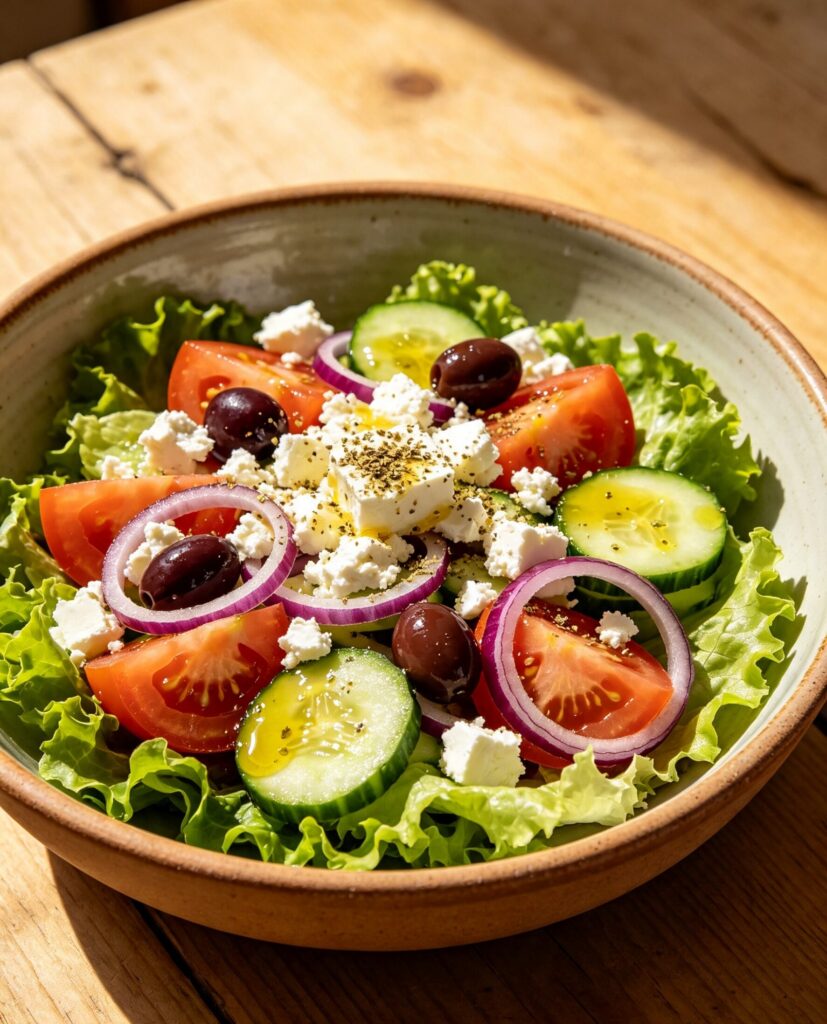
Introduction: Known internationally as 'Greek salad,' horiatiki (meaning 'village salad') is a simple, rustic combination that traditionally contains no lettuce, relying instead on ripe tomatoes, cucumber, olives and a thick slab of feta.
Cultural Background: Known internationally as 'Greek salad,' horiatiki (meaning 'village salad') is a simple, rustic combination that traditionally contains no lettuce, relying instead on ripe tomatoes, cucumber, olives and a thick slab of feta.
Tips: Never cut the feta into cubes — a whole slab is traditional. Use the ripest, most flavorful tomatoes available.
Variations: Some regions add capers or a few slices of green chili; a vegan version omits the feta and adds extra olives.
Storage: Best eaten fresh; if needed, store undressed vegetables separately for up to 1 day.
Reheating: Not applicable — served cold.
Nutrition: Approx. 320 kcal, 10 g protein, 26 g fat, 12 g carbohydrate per serving.
FAQs:
Q: Why is there no lettuce?
A: Traditional horiatiki relies on ripe vegetables and never includes lettuce.
Q: What olives are best?
A: Kalamata olives are the classic choice for authenticity.
Please log in to leave a comment.