
Desserts
Baklava
The Quirky Foodster Team
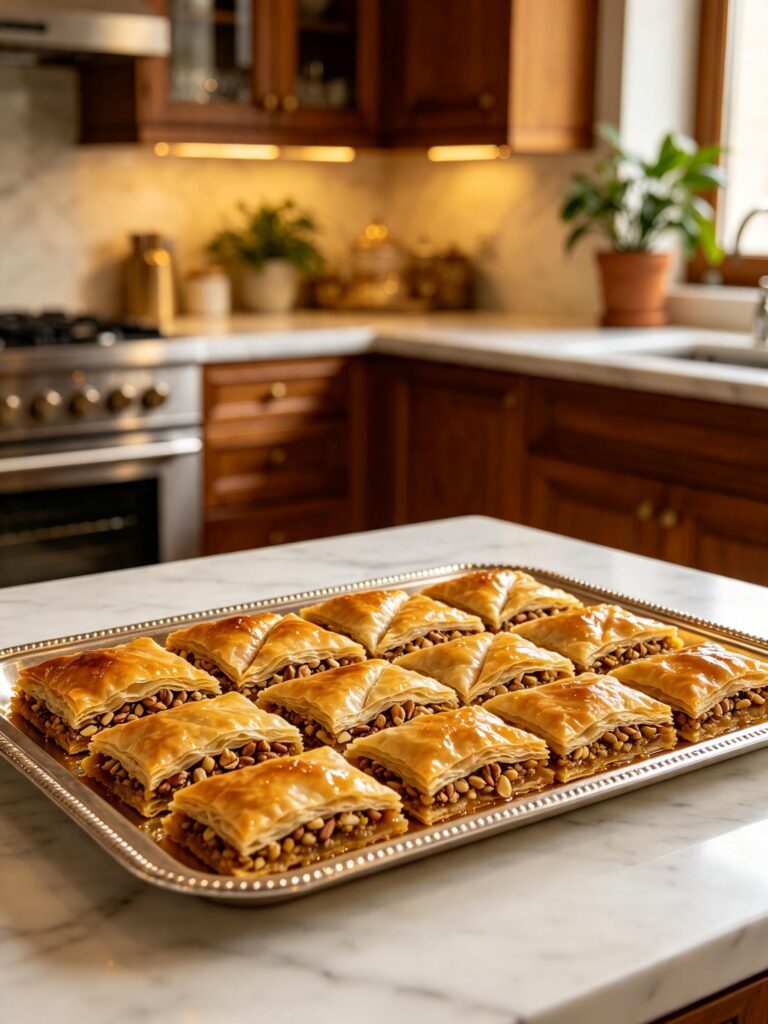
Ingredients
- 450 g (1 lb) filo pastry sheets, thawed if frozen
- 250 g (1 cup) unsalted butter, melted
- 300 g (3 cups) walnuts or pistachios, finely chopped
- 1 tsp ground cinnamon
- 2 tbsp sugar (for nut filling)
- 400 g (2 cups) sugar (for syrup)
- 250 ml (1 cup) water
- 1 tbsp lemon juice
- 2 tbsp honey
- 1 tsp orange blossom water or rose water
Method
- Preheat the oven to 180°C (350°F). Brush a baking dish with melted butter.
- Combine the chopped nuts, cinnamon and 2 tbsp sugar in a bowl.
- Layer 8-10 sheets of filo in the base of the dish, brushing each sheet generously with melted butter.
- Sprinkle a third of the nut mixture evenly over the pastry. Repeat layering filo (5-6 sheets, buttered) and nuts twice more, finishing with a top layer of 8-10 buttered filo sheets.
- Using a sharp knife, cut into diamond or square shapes before baking, cutting all the way through to the base.
- Bake for 40-45 minutes until golden and crisp.
- Meanwhile, make the syrup: combine sugar, water and lemon juice in a saucepan, bring to a boil, then simmer for 10 minutes. Stir in honey and orange blossom water, then remove from heat and cool slightly.
- Pour the warm syrup evenly over the hot baklava as soon as it comes out of the oven. Leave to cool completely and absorb the syrup, at least 4 hours, before serving.
Introduction: Baklava is one of the most iconic sweets of the Middle East and Eastern Mediterranean, made from layers
of paper-thin filo pastry, chopped nuts and a fragrant sugar syrup. Its exact origins are claimed and shared
by several cultures across the former Ottoman regions, and it remains an essential treat during Eid
celebrations, weddings and festive gatherings, often gifted between families and neighbours.
Cultural Background: Baklava is one of the most iconic sweets of the Middle East and Eastern Mediterranean, made from layers
of paper-thin filo pastry, chopped nuts and a fragrant sugar syrup. Its exact origins are claimed and shared
by several cultures across the former Ottoman regions, and it remains an essential treat during Eid
celebrations, weddings and festive gatherings, often gifted between families and neighbours.
Tips: Keep unused filo sheets covered with a damp cloth while working, as they dry out and crack quickly. Pour warm syrup over hot baklava (or cold syrup over cooled baklava) — never combine two hot elements, as this makes the pastry soggy. Cutting the baklava before baking makes it much easier to portion once cooled.
Variations: Use pistachios exclusively for a more traditional Levantine or Turkish style. Add a layer of kunafa dough (shredded filo) for extra texture. Drizzle with a little extra honey before serving for added sweetness.
Storage: Store covered at room temperature for up to 1 week, or refrigerate for up to 2 weeks.
Reheating: Baklava is traditionally served at room temperature and does not need reheating; a brief warm in a low
oven can restore crispness if desired.
Please log in to leave a comment.