
Soups
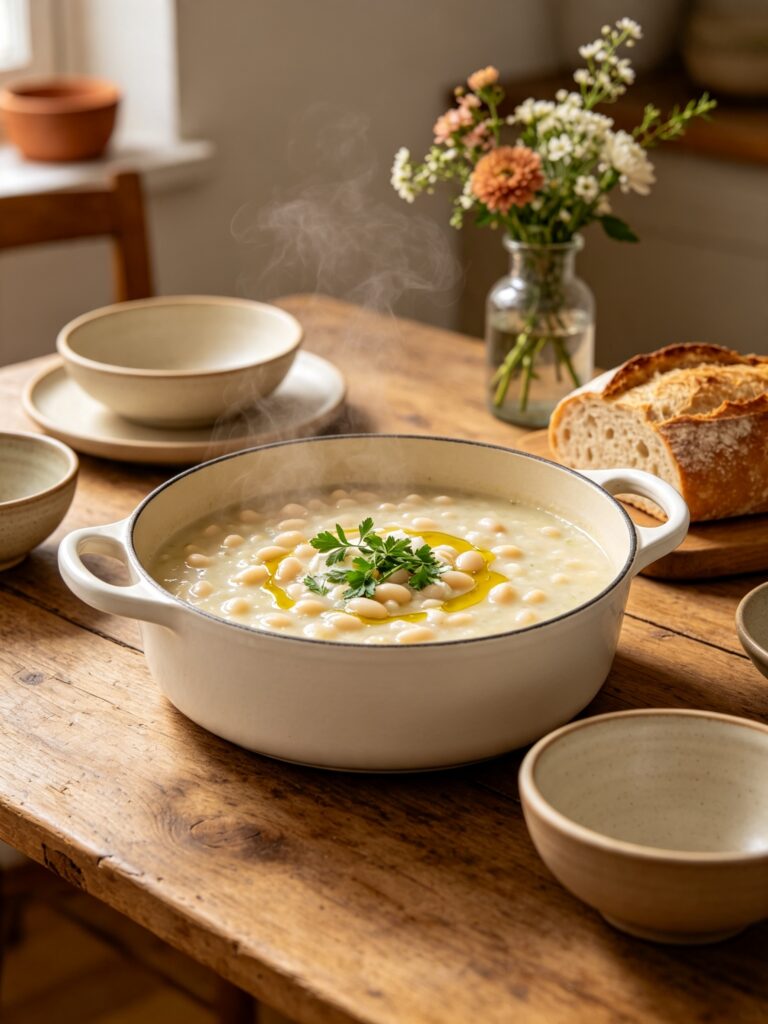
Greek White Bean Soup
The Quirky Foodster Team
Ingredients
- 400 g (2 cups) dried white beans (cannellini or navy), soaked overnight
- 2 carrots, sliced into rounds
- 2 celery stalks, sliced
- 1 large onion, diced
- 3 garlic cloves, minced
- 400 g (1 can (14 oz)) crushed tomatoes
- 120 ml (1/2 cup) extra virgin olive oil, divided
- 1.5 L (6 cups) water, plus more as needed
- 1 bay leaf Salt and black pepperSalt and black pepperto taste
- 2 tbsp fresh parsley, chopped
Method
- Drain and rinse the soaked beans. Place in a large pot, cover with fresh water, and bring to a boil. Boil hard for 10 minutes, then drain and rinse again (this reduces bitterness and aids digestion).
- Return the beans to the pot with 1.5 liters of fresh water and the bay leaf. Bring to a boil, then reduce to a simmer.
- Add the onion, carrots, celery, and garlic, and simmer gently for 45 minutes.
- Stir in the crushed tomatoes and half the olive oil, and continue simmering for 30-40 minutes more, until the beans are fully tender and the soup has thickened.
- Season generously with salt and pepper, and add a splash more water if the soup is too thick.
- Remove from heat, stir in the remaining olive oil, and let sit for 5 minutes before serving.
- Ladle into bowls and finish with a scattering of fresh parsley.
Introduction: Fasolada is often called the national dish of Greece, and for good reason — it has sustained the country through
hardship and remains one of the most common meals during Orthodox fasting periods. Built from dried beans,
tomatoes, and root vegetables in olive oil, it requires no animal products at all, making it a completely natural fit for
the many fasting days observed throughout the Orthodox calendar, most of all during Great Lent.
Cultural Background: Fasolada is often called the national dish of Greece, and for good reason — it has sustained the country through
hardship and remains one of the most common meals during Orthodox fasting periods. Built from dried beans,
tomatoes, and root vegetables in olive oil, it requires no animal products at all, making it a completely natural fit for
the many fasting days observed throughout the Orthodox calendar, most of all during Great Lent.
Tips: Boiling the beans hard for the first 10 minutes and discarding that water reduces both bitterness and gas-causing compounds. Adding salt too early toughens bean skins — season generously only once the beans are already tender. A generous final drizzle of good olive oil, stirred in off the heat, makes a noticeable difference to the finished flavor.
Variations: Add a diced potato for extra heartiness. Stir in a spoonful of tomato paste for deeper color and flavor if fresh tomatoes are out of season. Finish with a squeeze of lemon juice for brightness, a common regional variation.
Storage: Refrigerate in an airtight container for up to 5 days; the flavor improves after a day. Freezes well for up to 3 months.
Reheating: Reheat gently on the stovetop over medium-low heat, adding a splash of water if the soup has thickened too much, or
microwave until piping hot.
Please log in to leave a comment.