
Street Food
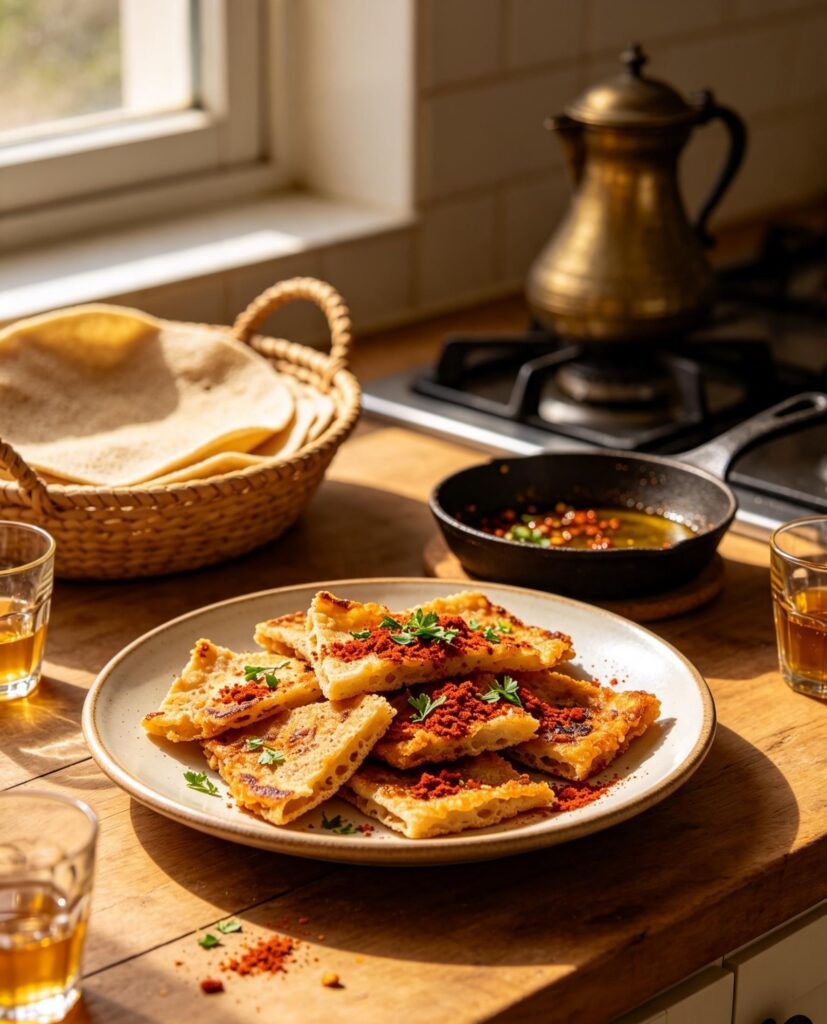
Kategna (Spiced Fried Injera)
The Quirky Foodster Team
Ingredients
- 4 pieces day-old injera
- 60 g (4 tbsp) niter kibbeh
- 2 tsp berbere spice blend
- 1 clove garlic, minced
- Salt, to taste
Method
- Melt the niter kibbeh in a frying pan over medium heat and add the garlic, cooking for 1 minute until fragrant.
- Stir in the berbere and cook for 30 seconds until the butter turns a deep red and smells aromatic.
- Cut or tear the injera into quarters and add to the pan, one or two pieces at a time.
- Fry for 1-2 minutes per side, pressing gently, until crisp and evenly coated in the spiced butter.
- Season lightly with salt and serve warm, either whole or torn into bite-sized pieces.
Introduction: Kategna transforms leftover or day-old injera into a crisp, spiced snack by frying it with berbere-infused butter, making it a popular quick bite sold by street vendors and enjoyed as an easy way to use up extra injera at home.
Cultural Background: Kategna transforms leftover or day-old injera into a crisp, spiced snack by frying it with berbere-infused butter, making it a popular quick bite sold by street vendors and enjoyed as an easy way to use up extra injera at home.
Tips: Day-old injera works better than fresh, as it holds up to frying without becoming soggy. Do not overcrowd the pan; fry in batches for even crisping.
Variations: A milder version reduces the berbere for those preferring less heat. Some vendors sprinkle a little dried herb or extra salt just before serving.
Storage: Best eaten fresh and warm; not suited to storage as it loses its crisp texture.
Reheating: Reheat briefly in a dry pan to help restore some crispness; avoid microwaving.
FAQs:
Q: What is Kategna traditionally made from?
A: It is typically made from leftover injera, making it a resourceful way to use up bread that has begun to dry out.
Q: Where is Kategna commonly sold?
A: It is a popular street food and snack sold at small stalls and eateries, especially in urban centres like Addis Ababa.
Please log in to leave a comment.