
Drinks
Buna (Ethiopian Ceremonial Coffee)
The Quirky Foodster Team
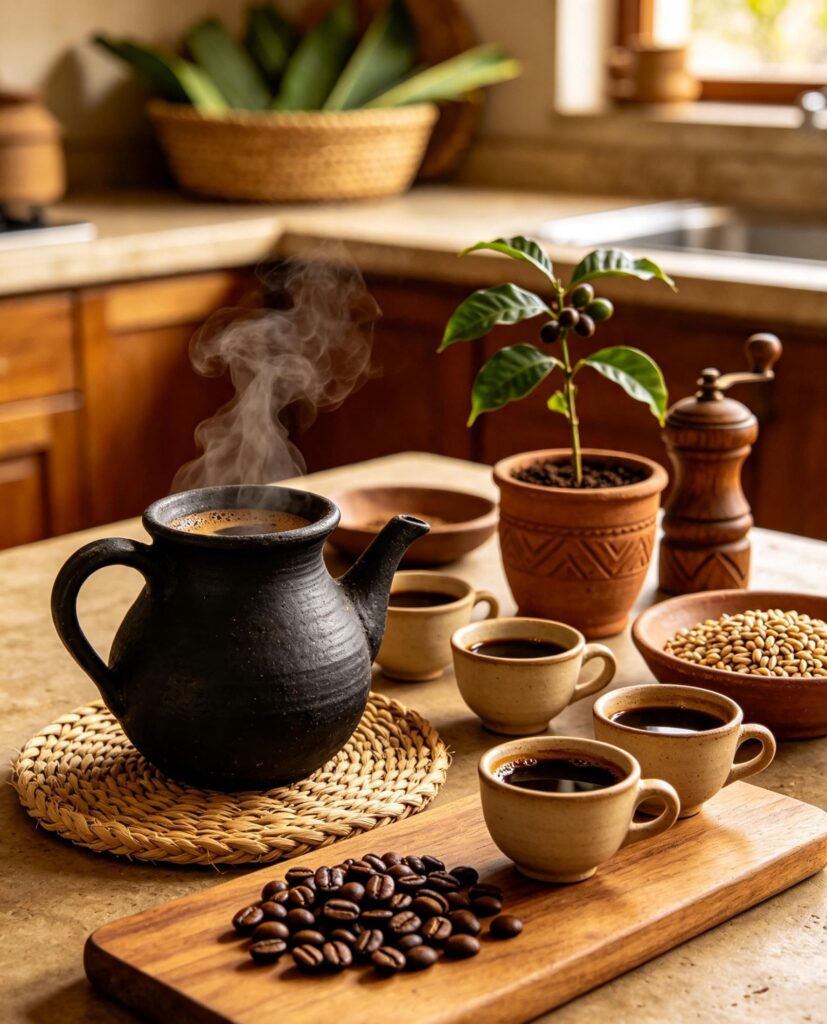
Ingredients
- 60 g (1/3 cup) green coffee beans
- 750 ml (3 cups) water
- Sugar, to taste (optional)
- A few fresh rue leaves or a pinch of ground cardamom (optional, traditional aromatics)
Method
- Rinse the green coffee beans and roast them in a dry frying pan over medium heat, stirring constantly, for 8-10 minutes until dark brown and glossy, releasing a strong aroma.
- Allow the roasted beans to cool slightly, then grind coarsely using a mortar and pestle or grinder.
- Bring the water to a boil in the jebena or a small saucepan.
- Add the ground coffee to the boiling water, reduce heat, and simmer gently for 5-8 minutes.
- Add cardamom or rue leaves if using, and simmer for a further 2 minutes.
- Allow the grounds to settle for a minute, then pour carefully into small cups, leaving the sediment behind.
- Serve with sugar on the side, traditionally accompanied by burning incense.
Introduction: Ethiopia is widely regarded as the birthplace of coffee, and Buna is prepared through an elaborate ceremony involving roasting green beans over charcoal, grinding them by hand, and brewing in a clay pot called a jebena.
Cultural Background: Ethiopia is widely regarded as the birthplace of coffee, and Buna is prepared through an elaborate ceremony involving roasting green beans over charcoal, grinding them by hand, and brewing in a clay pot called a jebena. The ceremony is a significant social ritual, often performed three times in a single sitting for guests.
Tips: Pour slowly and steadily from a height for the traditional presentation, taking care to leave the grounds in the pot. The coffee is traditionally served in three rounds from the same grounds, called Abol, Tona and Baraka, each slightly weaker than the last.
Variations: Some households add a small knob of butter to the coffee for a rich, savoury version called 'buna be-birsen'. A pinch of salt instead of sugar is preferred in some regions.
Storage: Best consumed fresh; not intended for storage.
Reheating: Reheating is not traditional; a fresh pot is prepared for each ceremony.
FAQs:
Q: What is a jebena?
A: A jebena is a traditional rounded clay coffee pot with a narrow neck, used specifically for brewing Ethiopian ceremonial coffee.
Q: Why is the coffee served in three rounds?
A: The three rounds, known as Abol, Tona and Baraka, represent a full coffee ceremony and a gesture of hospitality, with each round drawn from the same grounds.
Please log in to leave a comment.