
Salads
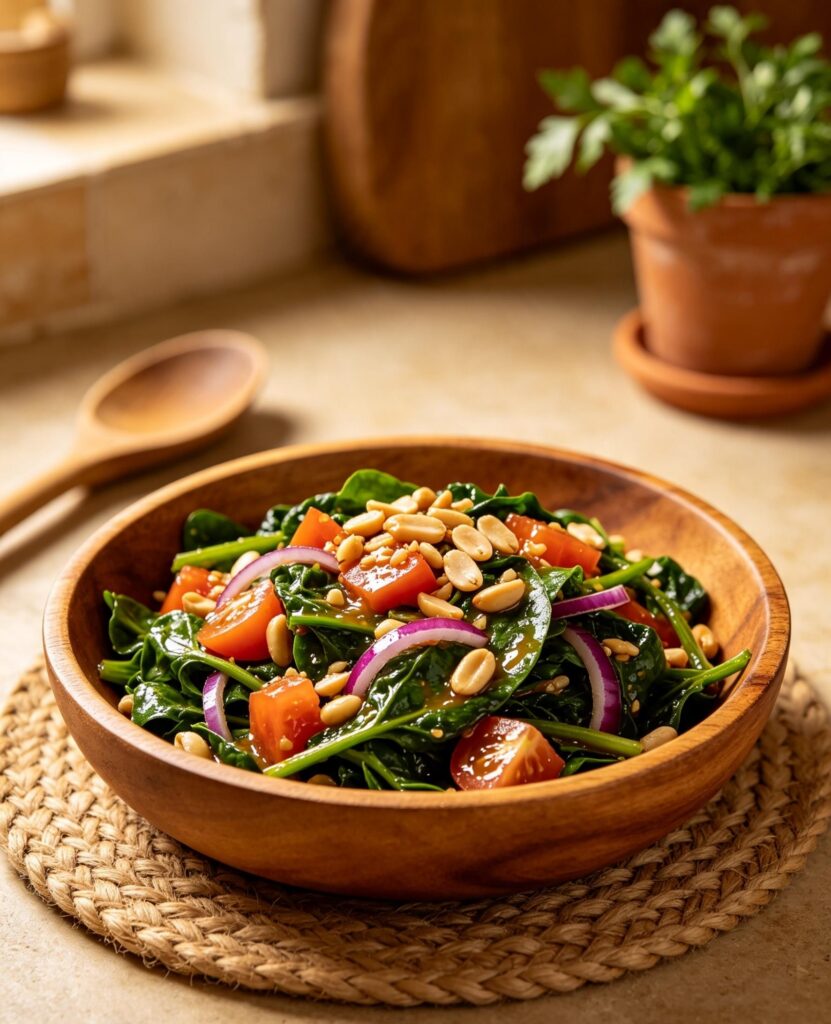
Wild Spinach and Peanut Salad
The Quirky Foodster Team
Ingredients
- 400 g (14 oz) fresh spinach or wild greens, washed and roughly chopped
- 60 g (1/3 cup) roasted peanuts, roughly crushed
- 1 small onion, thinly sliced
- 1 tomato, chopped
- 2 tbsp cooking oil
- Salt, to taste
- Squeeze of lemon juice
Method
- Blanch the greens briefly in boiling water for 1 minute, then drain well in a colander, pressing out excess water.
- Heat the oil in a frying pan and soften the onion for 3-4 minutes.
- Add the tomato and cook for a further 2 minutes until just softened.
- Stir in the blanched greens and cook for 2-3 minutes, just to heat through and combine flavours.
- Season with salt and a squeeze of lemon juice, then remove from heat.
- Toss through the crushed peanuts just before serving, either warm or at room temperature.
Introduction: Foraged greens such as incema and other wild spinach varieties have long supplemented the Swazi diet, gathered from fields and riverbanks and prepared simply so their fresh, slightly bitter flavour shines.
Cultural Background: Foraged greens such as incema and other wild spinach varieties have long supplemented the Swazi diet, gathered from fields and riverbanks and prepared simply so their fresh, slightly bitter flavour shines. Tossed warm with roasted peanuts, this salad turns a foraged staple into a dish substantial enough to serve alongside a main meal.
Tips: Don't overcook the greens after blanching — a quick toss keeps their colour and nutrients intact. If using tougher wild greens, blanch a minute or two longer until tender.
Variations: A pinch of chilli flakes adds warmth for those who prefer a spicier version. Baby spinach can be used as a convenient substitute for foraged wild greens.
Storage: Best eaten fresh; keeps refrigerated for 1 day, though texture softens further.
Reheating: Best served warm or at room temperature rather than reheated, as reheating overcooks the greens.
FAQs:
Q: What greens work best if wild spinach isn't available?
A: Regular spinach, Swiss chard or even kale (cooked slightly longer) all work well as substitutes.
Q: Is this served hot or cold?
A: Traditionally served warm, though it's also pleasant at room temperature as a side salad.
Please log in to leave a comment.