
Mains
English Fish and Chips
The Quirky Foodster Team
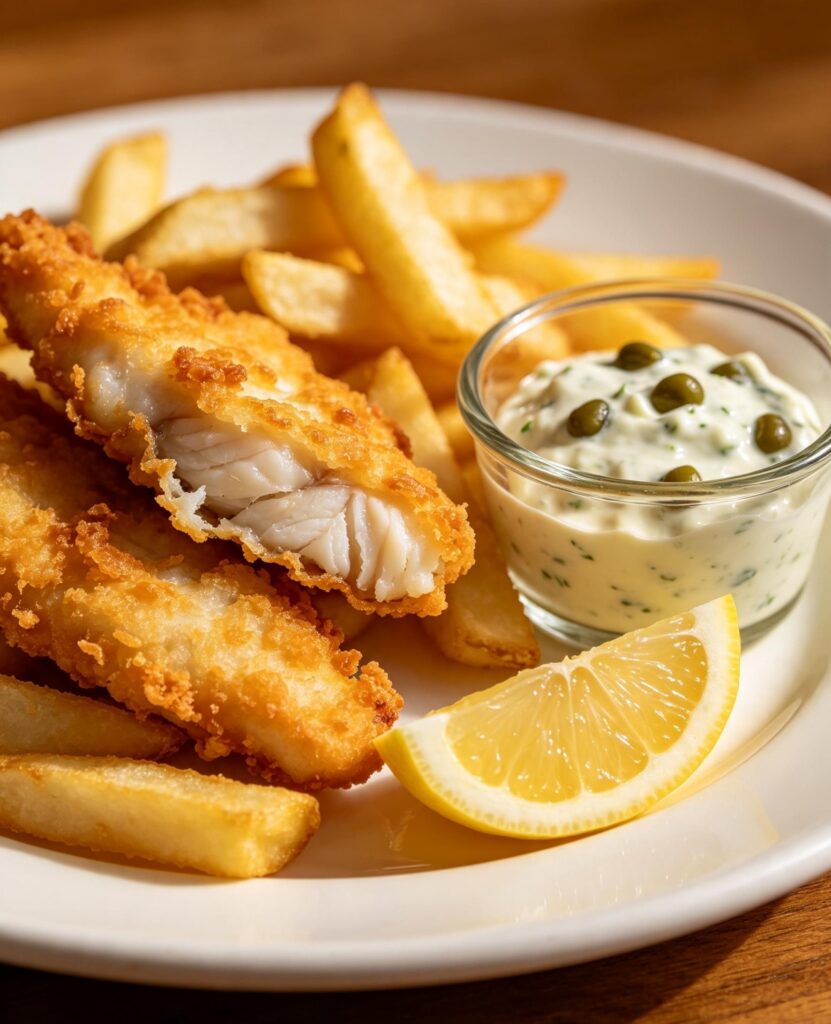
Ingredients
- 4 fillets (about 700 g) (4 fillets (about 1.5 lb)) Cod or haddock fillets, skinless
- 150 g (1 1/4 cups) Plain flour
- 200 ml (3/4 cup + 1 tbsp) Cold sparkling water or beer
- 1 tsp Baking powder
- 1 tsp Salt
- 1 kg (2.2 lb) Large potatoes, cut into thick chips
- 1.5 l (6 1/3 cups) Vegetable oil, for frying
- to taste Malt vinegar, to serve
Method
- Cut the potatoes into thick chips and rinse in cold water to remove excess starch; pat dry thoroughly.
- Heat the oil to 130°C (265°F) and blanch the chips in batches for about 5 minutes until soft but not coloured; drain on a wire rack.
- Increase the oil temperature to 180°C (350°F).
- In a bowl, whisk together the flour, baking powder and salt, then gradually whisk in the cold sparkling water or beer to form a smooth, light batter.
- Pat the fish fillets dry, then dip each into the batter, letting excess drip off.
- Fry the battered fish for 6 to 8 minutes, turning once, until golden brown and crisp; drain on a wire rack.
- Increase the oil temperature to 190°C (375°F) and fry the blanched chips again for 3 to 4 minutes until golden and crisp.
- Drain the chips, season with salt, and serve immediately alongside the fried fish with malt vinegar.
Introduction: Battered fried fish served with thick-cut chips is arguably England’s most internationally recognised dish, emerging in the mid-19th century from the combination of Jewish fried fish traditions and the English chip shop, and becoming a working-class Friday night staple across the country.
Cultural Background: Battered fried fish served with thick-cut chips is arguably England’s most internationally recognised dish, emerging in the mid-19th century from the combination of Jewish fried fish traditions and the English chip shop, and becoming a working-class Friday night staple across the country.
Storage: Best eaten immediately; leftover fish and chips can be refrigerated for up to 1 day, though the texture will soften.
Reheating: Reheat in an oven at 200°C (400°F) for about 10 minutes to help recrisp the batter and chips; avoid microwaving, as it makes them soggy.
Tips: Blanching the chips at a lower temperature before a final hot fry gives the classic crisp-outside, fluffy-inside texture. Use very cold, well-carbonated liquid in the batter, as the bubbles help create a light, crisp coating.
Variations: Mushy peas and tartare sauce are classic traditional accompaniments. A gluten-free batter can be made using rice flour and a gluten-free raising agent. A vegetarian version uses a similarly battered and fried halloumi or thick vegetable slice in place of fish. For a vegetarian version, replace the fish with thick slices of halloumi or aubergine, batter and fry in exactly the same way, keeping the chips and vinegar accompaniment unchanged.
Nutrition: Calories: 650 kcal | Protein: 34 g | Carbs: 58 g | Fat: 32 g
FAQs:
Q: Why is the fish double-dipped in cold batter?
A: The very cold batter, combined with hot oil, creates a rapid sealing effect that produces a light, crisp coating rather than a heavy, greasy one.
Q: Why are the chips fried twice?
A: A lower-temperature first fry cooks the inside of the chip until soft, while a hotter second fry crisps and browns the outside, giving the classic fluffy-inside, crunchy-outside texture.
Please log in to leave a comment.