
Desserts
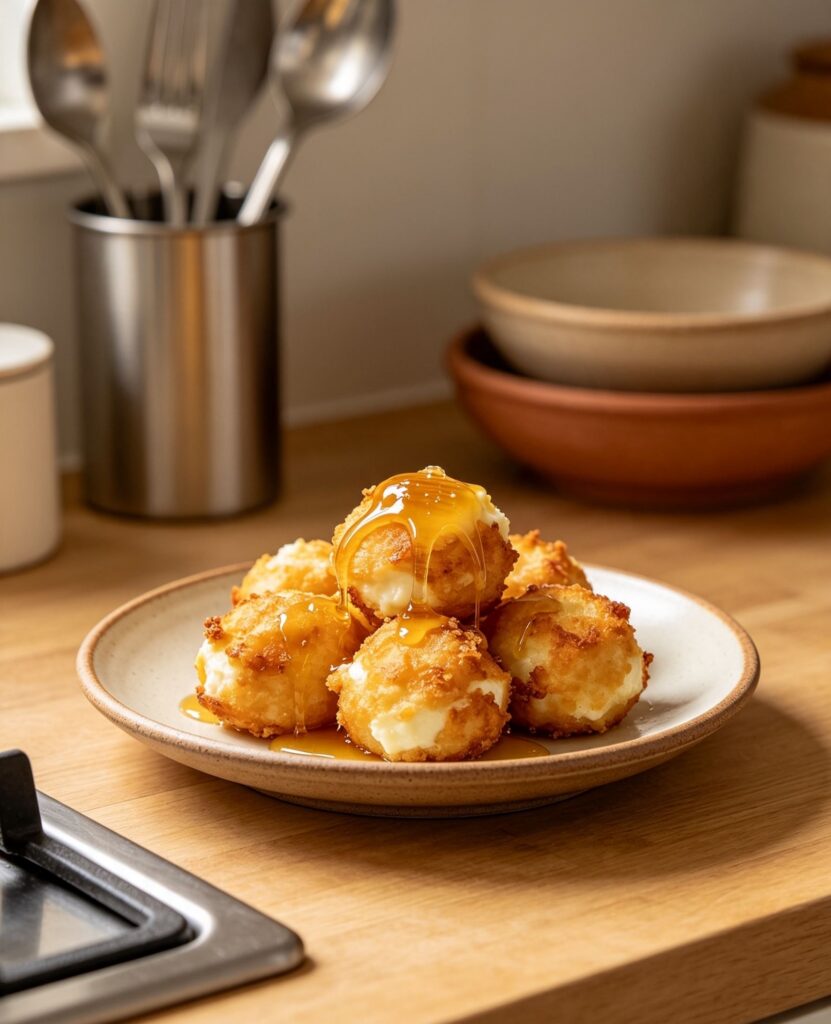
Globi (Fried Cheese and Honey Fritters)
The Quirky Foodster Team
Ingredients
- 200g Soft fresh cheese, such as ricotta
- 150g Fine semolina flour
- 1 egg
- Olive oil or neutral oil, for deep-frying (about 750 ml/3 cups)
- 120ml Honey, warmed
- 1 tsp poppy seeds, to finish
Method
- In a mixing bowl, combine the cheese, semolina and egg into a soft, workable dough. Rest for 10 minutes.
- Shape the dough into small balls, roughly the size of a walnut.
- Heat the oil in a deep, heavy-based saucepan to 170C (340F).
- Fry the balls in small batches for 3-4 minutes, turning occasionally, until deep golden brown and cooked through.
- Drain on paper towels, then arrange on a serving plate, drizzle generously with warmed honey, and sprinkle with poppy seeds before serving warm.
Native Name: Globi
Cultural Background: Cato the Elder gives detailed instructions for globi – small balls of cheese and semolina dough, deep-fried in fat and finished with honey – describing them as an offering food as well as an everyday sweet, popular enough to survive almost unchanged in spirit as the fried dough treats found across the Mediterranean today.
Tips: Keep the oil temperature steady around 170C – too hot and the outside burns before the centre cooks; too cool and they absorb excess oil.
Variations: Roll the finished, honey-drizzled globi in crushed nuts for extra texture, a common festive variation.
Vegetarian / Vegan Note: Vegetarian as written; not easily adapted to vegan due to the cheese and egg binding the dough.
Storage: Best eaten fresh and warm; will keep at room temperature for up to 1 day but texture softens.
Reheating: Warm briefly in a low oven (150C/300F) for a few minutes to re-crisp before serving.
Nutrition: Approx. 310 kcal, 9 g protein, 38 g carbohydrate, 14 g fat per serving.
FAQs:
Q: What cheese works best?
A: A fresh, mild cheese like ricotta gives the closest texture; avoid very wet cheeses that will make the dough too loose.
Q: Were these an everyday treat?
A: Cato records them partly in a ritual/offering context, but similar fried dough sweets were also enjoyed as everyday festive food.
Please log in to leave a comment.