
Appetizers
Moretum (Herbed Garlic Cheese Spread)
The Quirky Foodster Team
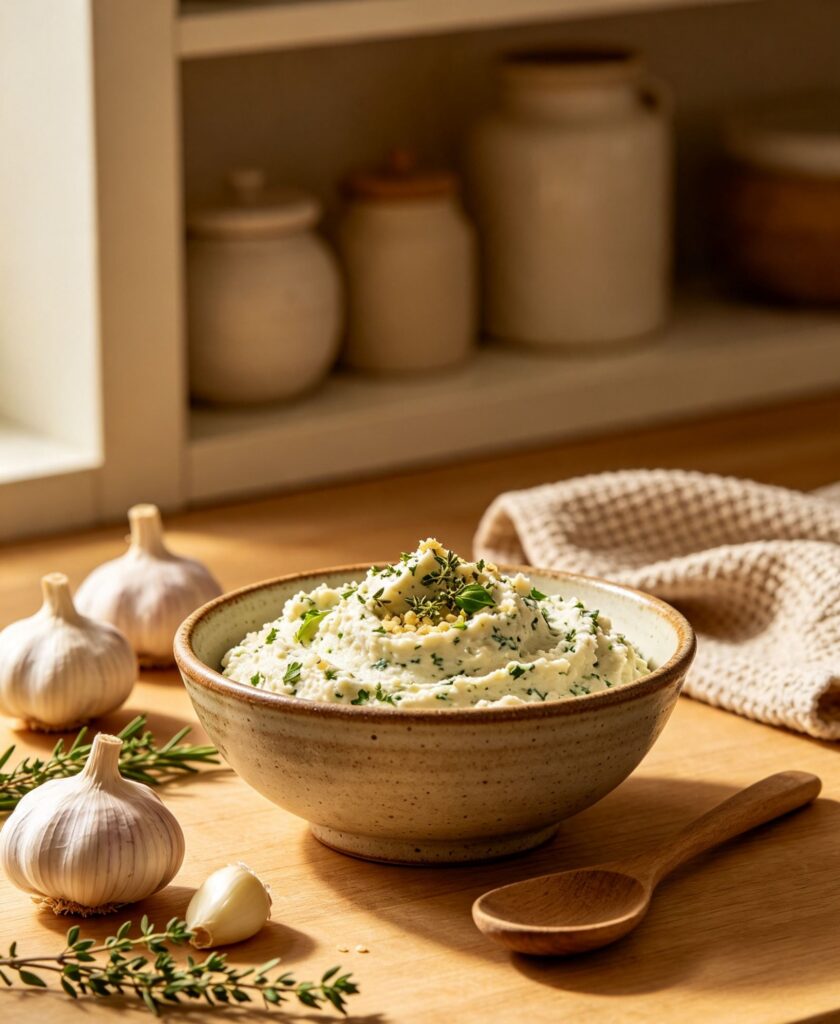
Ingredients
- 150g Soft fresh cheese, such as pecorino or feta
- 3 garlic cloves, peeled
- 2 tbsp fresh coriander leaves
- 2 tbsp fresh parsley
- 1 tbsp fresh rue or celery leaves (substitute more parsley if unavailable)
- 45ml Olive oil
- 15ml White wine vinegar
- A pinch of salt
Method
- Pound the garlic with a pinch of salt in a mortar until it forms a paste.
- Add the herbs and continue pounding until well combined and fragrant.
- Crumble in the cheese and pound or stir until the mixture comes together roughly.
- Work in the olive oil a little at a time until the mixture is spreadable.
- Stir through the vinegar, taste and adjust the salt, then serve with fresh bread.
Native Name: Moretum
Cultural Background: Moretum is described in loving detail in a poem once attributed to Virgil, in which a farmer pounds garlic, herbs, cheese, olive oil and vinegar together in a mortar before spreading it on bread. It was rustic peasant fare – simple, pungent and made from whatever herbs were to hand in the garden.
Tips: A mortar and pestle gives the authentic rustic texture, but a food processor pulsed briefly works well for a quicker version – don't over-process to a total puree.
Variations: Add a few walnuts to the mortar for extra richness, a common regional variation.
Vegetarian / Vegan Note: Vegetarian as written; substitute a firm plant-based cheese for a vegan version.
Storage: Store covered in the refrigerator for up to 3 days.
Reheating: Not applicable – served cold or at room temperature.
Nutrition: Approx. 190 kcal, 6 g protein, 3 g carbohydrate, 17 g fat per serving.
FAQs:
Q: What is rue and can I skip it?
A: Rue is a bitter herb rarely used today – parsley or a small pinch of bitter greens makes a fine substitute.
Q: What should I serve this with?
A: Fresh or toasted rustic bread is traditional, as described in the original poem.
Please log in to leave a comment.