
Desserts
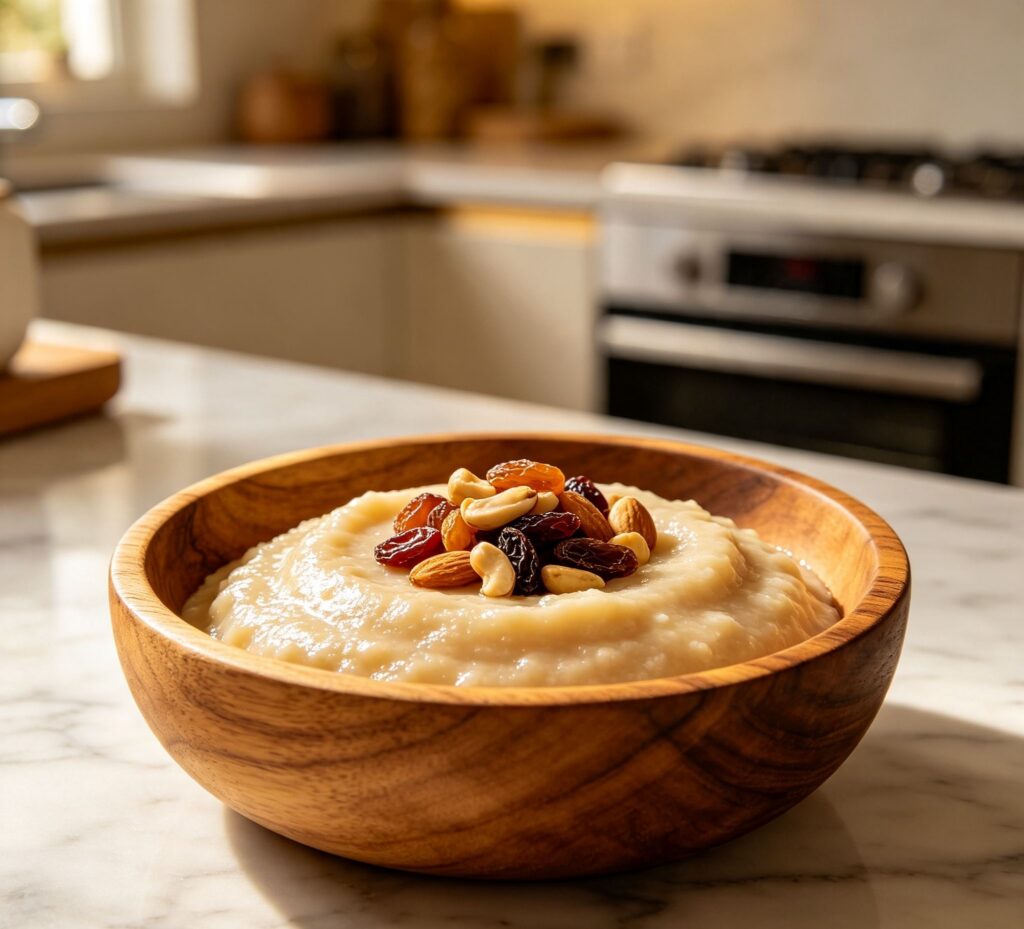
Ancient Wheat Starch Pudding
The Quirky Foodster Team
Ingredients
- 80g (2/3 cup) Cornflour (cornstarch) or wheat starch
- 750ml (3 cups) Water
- 150g (1/2 cup) Honey
- 2 tbsp rosewater
- 2 tbsp ground pistachios, to serve
- pinch of salt
Method
- Whisk the cornflour with 200 ml (about 3/4 cup) of the water in a small bowl until completely smooth, with no lumps.
- Bring the remaining water to a simmer in a saucepan with the honey and a pinch of salt, stirring until the honey dissolves.
- Whisking constantly, pour the cornflour mixture into the simmering liquid.
- Continue cooking over medium-low heat, whisking constantly, for 8-10 minutes until thick and glossy.
- Remove from heat, stir in the rosewater, then pour into serving bowls or a shallow dish and chill for at least 2 hours until set.
- Scatter with ground pistachios before serving.
Native Name: Faludhaj
Cultural Background: Faludhaj was among the most celebrated sweets of the Sassanid Persian court, a smooth, honey-sweetened
starch pudding fragrant with rosewater, famous enough to be praised in early Islamic-era poetry as a byword for
luxury. This version reconstructs its simple, elegant core: starch, honey, and rosewater set into a soft, glossy
pudding.
Tips:
– Whisk constantly and don't leave the pot unattended — the starch can lump or catch quickly.
– Wet the serving bowls lightly before pouring in the pudding to help it release cleanly if unmoulding later.
Variations:
– Use orange blossom water instead of rosewater for a different fragrance.
– Layer the pudding with chopped dates for extra texture.
Storage: Refrigerate covered for up to 4 days.
Reheating: Serve chilled or at room temperature; this dessert is not reheated.
Nutrition: Per serving: approx. 155 kcal, 1 g protein, 34 g carbohydrate, 2 g fat, 0.5 g fibre.
FAQs:
Q: Can I use sugar instead of honey?
A: Yes, though honey gives a closer flavour to the historical dish; use about 120 g (1/2 cup plus 2 tbsp) sugar dissolved into the hot liquid.
Q: Why is my pudding lumpy?
A: This usually means the cornflour slurry wasn't fully smooth before adding, or it was poured in too quickly without constant whisking.
Please log in to leave a comment.